
Newly-Unearthed Neanderthal ‘Skeleton’ Reveals Rituals Performed In The Past
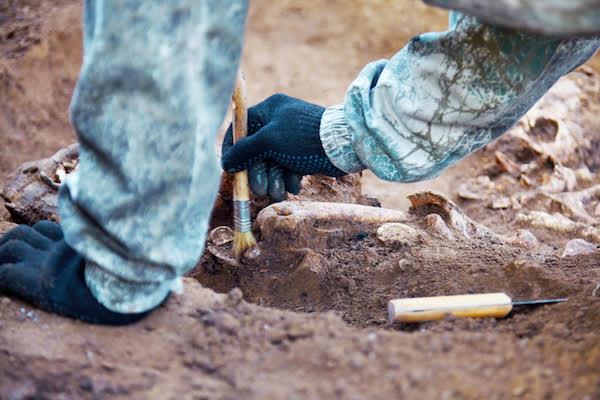
Image via Shutterstock
Researchers have uncovered an “articulated skeleton” consisting of the upper torso and crushed skull at Shanidar Cave in Iraq. The new specimen is said to have belonged to a middle-aged or older adult.
Dubbed as Shanidar Z, the skeleton is the first discovery of articulated Neanderthal remains since 2010, and was unearthed in Cova Forada.
Back in the 1950s and 1960s, excavations in Shanidar revealed separated remains of 10 Neanderthal men, women and children. Archaeologists traced clumps of pollen around one of the skeletons in these burials.
The pollen insinuated that the Neanderthals were buried along with flowers, pointing at the possibility that they practiced cultural ritual rites.
Dr Emma Pomeroy from the University of Cambridge described that the latest finding, Shanidar Z, is more substantial and detailed than the previous discoveries. She noted the significant rock laid next to the head of Shanidar Z, which may indicate the way Neanderthals buried the dead.
Professor Graeme Barker from Cambridge’s McDonald Institute of Archaeology detailed that the new excavation site suggests the bodies were buried in an area formed by water in the cave floor. There were signs showing that it was deliberately dug to be made deeper for the bodies to rest in.
A 70,000-year-old Neanderthal skeleton has bee found in the foothills of Iraq
— THE BLACK SALTIRE#FBSI (@80_mcswan) February 19, 2020
The remains, consisting of a complete skull, upper thorax and both hands
early analysis suggests the skeleton, named Shanidar Z, is more than 70,000 years old pic.twitter.com/diGKnHZoZV
[via BBC, cover image via Shutterstock.com]
Also check out these recent news


