
NASA Unveils Highest-Resolution Images Of The Sun With Mysterious Strands
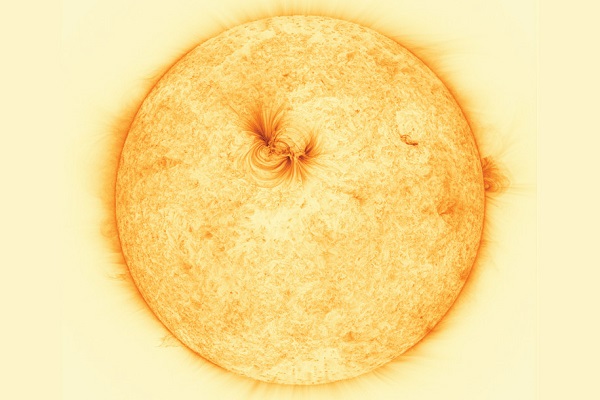
Image via University of Central Lancashire
NASA has released the highest-resolution photos of the sun, unveiling more details about its atmosphere.
The images, taken by the space-based NASA High-Resolution Coronal Imager (Hi-C) telescope, were studied by scientists from the University of Central Lancashire and NASA’s Marshall Space Flight Center.
According to the team’s findings, parts of the Sun’s atmosphere that were previously thought to be empty are actually filled with strands of hot gasses measuring 500.5 kilometers (311 miles) wide.
NASA’s Hi-C telescope was able to discern structures in the Sun’s atmosphere as small as 70 kilometers (43 miles) in size. What exactly created these strands is still unknown.
Scientists will now debate why the strands are formed and how their presence can explain the eruption of solar flares and solar storms. These events from the sun might have a direct effect on life on Earth.
Postdoctoral researcher at UCLan, Tom Williams, said that the images present a greater story on how Earth and Sun relate to each other.
“This is a fascinating discovery that could better inform our understanding of the flow of energy through the layers of the Sun and eventually down to Earth itself,” Williams said.
Robert Walsh, professor of solar physics at UCLan, said the images have provided an “ultra-high definition” glimpse of the sun for the first time.
“Until now, solar astronomers have effectively been viewing our closest star in standard definition,” Walsh said. “The exceptional quality of the data provided by the Hi-C telescope allows us to survey a patch of the Sun in ‘ultra-high definition’ for the first time.”
NASA's Hi-C mission has just delivered the most detailed look ever at the Sun's atmosphere, revealing a tangled nest of million-degree plasma filaments. https://t.co/jIG12xRePH pic.twitter.com/n2SHRWjbMe
— Corey S. Powell (@coreyspowell) April 9, 2020
The highest-resolution images of the Sun and its atmosphere ever taken.
— Samantha Josephine Stockings (@HattersonFord) April 9, 2020
📷: University of Central Lancashire (UCLan) pic.twitter.com/YqFGouBm32
[via Sky News, opening image via University of Central Lancashire]
Also check out these recent news


