
Scientists Attempt To Replicate How Smelly 16th-Century Europe Was Using AI
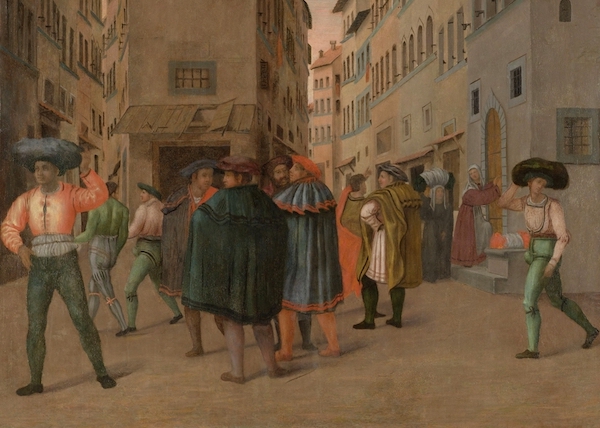
Image via Shutterstock
You might be enamored by historical architecture, but would you feel the same about how its surroundings smelled during its heyday? Perhaps not. Whereas people’s senses are now dominated by distractions of the sight and sound, 16th-century Europeans were actually chasing the scent.
Scientists from the €2.8 million- (US$3.34 million) funded Odeuropa project are now hoping to nail down, for real, what all the fuss was about. The team, made up of researchers from the Royal Netherlands Academy of Arts and Sciences and Anglia Ruskin University in Cambridge, is developing an AI that will scan historical texts of seven languages and pick up on descriptions of odors to recreate a smellscape of the 1500s.
After which, they’ll compile an online Encyclopedia of Smell Heritage to help illustrate Europe’s olfactory past and the stories behind its odors, as well as work with chemists and perfume creators to replicate these scents, The Guardian reports. The funky bouquets might also be displayed in museums and other historical establishments.
No offense—your ancestors didn’t smell all that great.
But this is what you’d expect from an era that didn’t have modern plumbing and such. Of course, Europe didn’t just smell like a giant toilet left unflushed; its fragrance was also defined by tobacco and religious scents like incense.
Dr William Tullett, a member of the research group and a lecturer in history from the Anglia Ruskin University, believes that the “hot, smokey, pungent” tobacco was “a central smell” in 16th-century Europe, evidenced by the copious printed texts that referenced it since 1500.
According to historical literature, people only started complaining about the smell of tobacco in theaters in the 18th century.
In the 18th and 19th centuries, you’d also get a mix of “smelling salts” for fits and fainting, and “stinky canal” in the air.
Caro Verbeek, one of the researchers and a scent historian at The Vrije Universiteit Amsterdam, interestingly detailed to Live Science that body odors only became frowned upon at the dawn of the 20th century. As late as in the 1900s, “animal manure was glorified by writers,” she noted, since it reminded them of the nostalgic countryside as compared to the “odorless” bourgeoisie. The industrial movement was when perfume and soap became more accessible for the lower social classes, so pungent BO became taboo.
Verbeek believes that scent can be a “much more intimate, direct and emotional way” to the past “than language and images.”
The project will begin in January and is anticipated to run for three years.
[via Live Science and Boing Boing, cover image via Shutterstock]
Also check out these recent news


