
Lincoln, Rumored To Be ‘Ugly,’ Had Pictures Retouched To Prove Haters Wrong
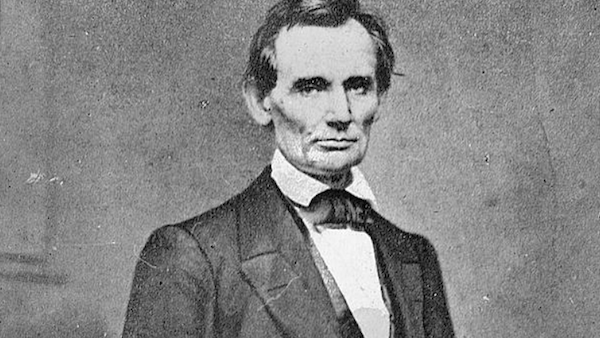
Photo of Lincoln (Cooper Union photo, 1860), image via Library of Congress, Prints & Photographs Division, [LC-F8112- 44650]
These days, first impressions are drawn from photographs. You’ll need a profile picture on social media, and even more so on dating apps like Tinder, so others can put a face to a name. However, Abraham Lincoln doesn’t live in this era.
Back when Lincoln was running for the presidency, Americans could only imagine what he looked like. And they heard he was ugly.
A compelling feature by Atlas Obscura revealed that news outlets had painted an unsightly picture of the Republican presidential hopeful. The Houston Telegraph, for one, described him as “the leanest, lankiest, most ungainly mass of legs, arms and hatchet face ever strung upon a single frame,” and suggested he had “most unwarrantably abused the privilege which all politicians have of being ugly.”
Democrats made up a rallying cry that ended with, “We beg and pray you— Don’t, for God’s sake, show his picture.”
In a bid to win the people’s vote, Lincoln enlisted photographer Mathew Brady to make him look good. Brady was a master retoucher of his time long before the existence of Photoshop; according to Mary Warner Marien’s Photography: A Cultural History, the photographer “conceptualized images, arranged the sitters, and oversaw the production of pictures.”
One of the most famous portraits of Lincoln, captured before he gave his Cooper Union Address, was shot by Brady and enhanced with some “special effects,” detailed Atlas Obscura. The photographer shone copious amounts of lighting on the would-be president’s face so people wouldn’t fixate on his “gangly” build.
Lincoln was also asked to curl up his fingers to distract from their length. His collar was “artificially enlarged” so his neck wouldn’t look too long.
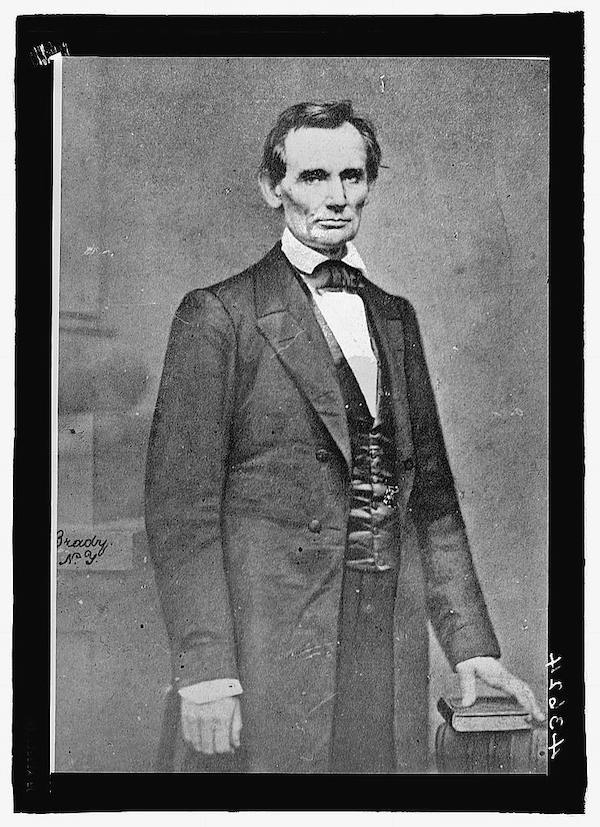
Photo of Lincoln (Cooper Union photo, 1860), image via Library of Congress, Prints & Photographs Division, [LC-F8112- 44650] (public domain)
This was the first time many Americans had a glimpse of their future president, and the move proved to be successful. Lincoln would later declare, “Brady and the Cooper Institute made me President.”
The picture was printed across newspapers and postcards, and some artists would even take the creative liberties to further enhance his looks by smoothing his hair and “subtly [refining] his features.”
After becoming president, Lincoln would recruit Brady to have several more of his portraits taken, including the ones on the penny and US$5 banknote.
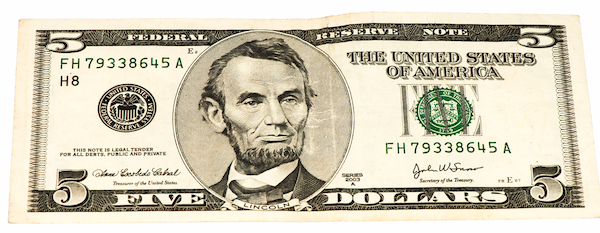
Image via Shutterstock
The interest in retouching Lincoln’s portraits persisted after his assassination, as artists felt compelled to depict the former president as a “hero.” For portrait painter Thomas Hicks, he repurposed a picture of the racist, pro-slavery John C. Calhoun and superimposed it with Lincoln’s face.
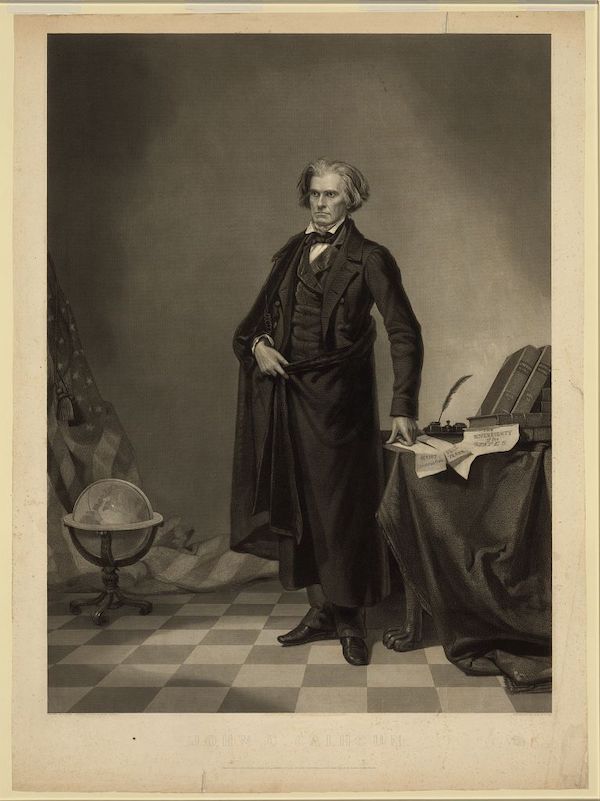
John C. Calhoun / painted by T. Hicks ; likeness from a dage. by Brady ; engraved by A.H. Ritchie, image via Library of Congress, Prints & Photographs Division, [LC-DIG-pga-02499]
In place of the words “strict constitution,” “free trade,” and “the sovereignty of the states” on a set of desk papers, Hicks added the phrases “constitution,” “union,” and “proclamation of freedom.” Everyone thought the edit was authentic for a century.
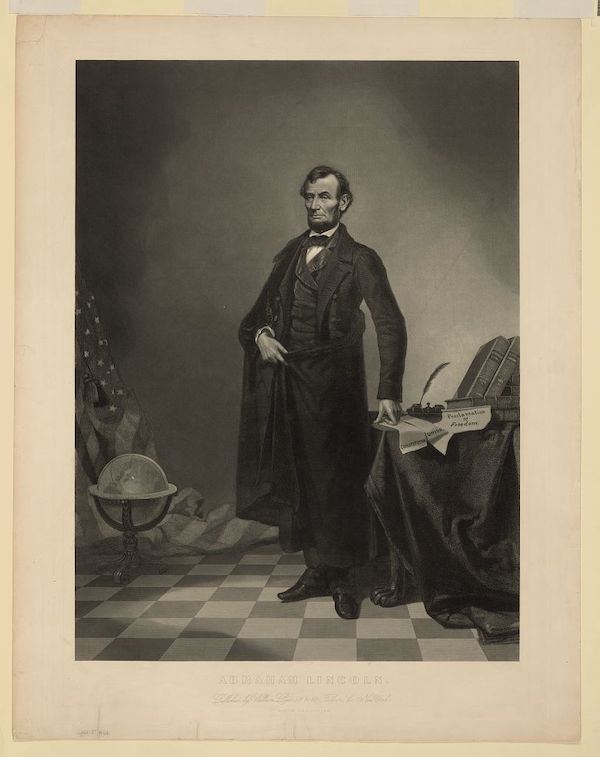
Abraham Lincoln. by Brady ; engraved by A.H. Ritchie, image via Library of Congress, Prints & Photographs Division, [LC-DIG-pga-02353]
Atlas Obscura details this fascinating piece of history even further in its article. Read it here
[via Atlas Obscura, images via Library of Congress, Prints & Photographs Division]
Also check out these recent news


