
US Mahjong Board Maker Apologizes After Accusations Of Erasing Chinese Culture
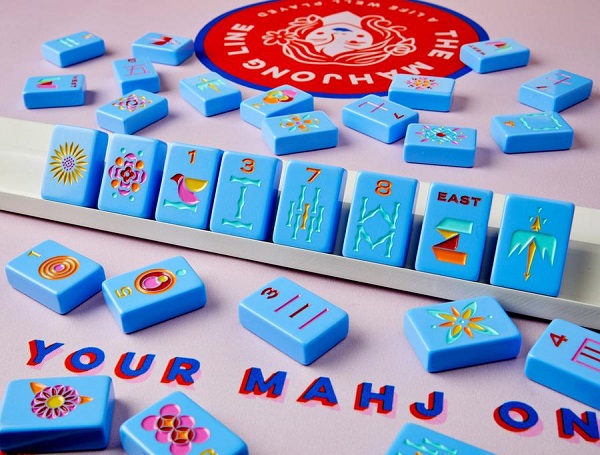
Image via The Mahjong Line
A Dallas-based company has suffered backlash for redesigning mahjong sets to make it have “a bit of edge.”
The Mahjong Line was accused of cultural appropriation after it claimed that the game needed a “respectful refresh.” The mahjong sets, which were priced between US$325 and US$425, had images of bubbles and bags of flour in replacement of traditional symbols of the game.
The idea behind the Mahjong Line was by Kate LaGere, who claimed that the traditional tiles looked all too similar and “did not reflect the fun” she had when she played the game, per the company’s website. The redesigned tiles now have images of bar soap, palm trees, Arabic numericals and the word “BAM!”, which did not sit well among internet users as they claimed the new look erased the Chinese culture.
Mahjong is a tile-based game originated from China, and is layered with cultural significance. Taiwanese-American columnist Jeff Yang explained its significance in a 2018 article, analyzing a scene where it is played in the movie Crazy Rich Asians.
The redesigned tiles were met with severe backlash by social media users. “My Chinese-Canadian immigrant parents did not fight racism and microaggression in Canada for #themahjongline, a white- and female-led company to not even do the bare minimum to respect the historical significance of mahjong,” a Twitter user said.
Anneliese Heinz, a historian who studied the game’s crossover into American culture, told NBC News that although the game has evolved and new designs and play styles have been introduced over time, The Mahjong Line’s sets showed “a lack of genuine and actual engagement with Chinese people who are connected to this culture and history.”
“What we’re seeing here is a real ignorance of this history that remains ignored in American education,” Heinz continued.
According to CBS News, none of the three white women who run the company has Chinese heritage.
The Mahjong Line has released a statement, apologizing for its “failure to pay proper homage to the game’s Chinese heritage.”
The company said it had set out “with pure intentions and a shared love for the game of American mahjong.”
“Using words like ‘refresh’ were hurtful to many and we are deeply sorry,” the statement read. “We are always open to constructive criticism and are continuing to conduct conversations with those who can provide further insight to the game’s traditions and roots in both Chinese and American cultures.”
2/2: It's already 2021 ladies, DO AND BE BETTER. You could have been amazing female CEOs and helped your Asian brothers and sisters. Instead, you start the year off with such an inconsiderate and disrespectful product#themahjongline pic.twitter.com/h9afRAaaUk
— Yuelin Ge (@yuelin_ge) January 5, 2021
Our ancestors wouldn't believe the ✨audacity✨ #themahjongline pic.twitter.com/eXvsSNLfbH
— Wong Fu Productions (@wongfupro) January 6, 2021
I think about that small clip l saw once about mahjong makers and craftsmen lamenting about how they're going out of business, worried about their jobs because of how seemingly old-fashioned the game is as well as online platforms, and then I see this. https://t.co/bFfvYnXX2K
— 叉烧宝bae, 攞my雞 ? How DARE. (@blackadlerqueen) January 5, 2021
so a bunch of white ladies decided to redesign mahjong for wHiTe GiRL aEsThEtiC (because traditional Chinese tiles were too boring and didn't match their star signs), and had the caucasity to charge $425 for horribly design sets that make the game HARDER to play ~a thread~ pic.twitter.com/sgbINs1XzM
— untitled.ai (@christinacyoung) January 5, 2021
Mahjong is a game with infinite variations that has been respectfully adopted by cultures around the world, and all of them would say this set is absurdly expensive trash https://t.co/jMFspEn3bs
— Jeff Yang (@originalspin) January 5, 2021
[via NBC News, cover image via The Mahjong Line]


