
Optical Illusion Study Suggests Depression Affects How People View The World
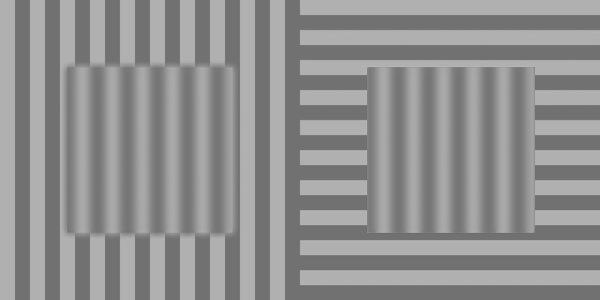
Image via Shutterstock
It’s no secret that depression affects the way you think, but a new study purports that people who are going through something might also see things differently.
In a new paper published in the Journal of Psychiatry and Neuroscience, a team of scientists led by psychologist Viljami Salmela described that, when presented with an optical illusion, “depressed patients perceived the contrast of the images shown differently from non-depressed individuals.”
The team aimed to find out how the cerebral cortex, responsible for receiving information from the five senses, would differ among 111 people who were experiencing “major depressive episodes” and 29 who weren’t, per Science Alert. The latter served as the control group.
The hope was to better grasp how brains take in visual information and look for possible treatments for depression.
Two variations of the visual illusion were shown to the groups:
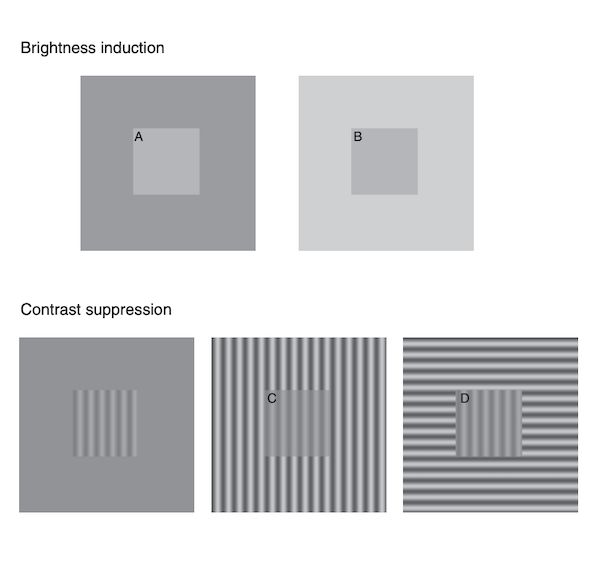
Image via Salmela et al / Journal of Psychiatry and Neuroscience
The first, displayed directly below, tested participants for “brightness induction.” It portrays two large squares of varied darkness, along with two smaller squares within them. While the smaller squares seem to contrast each other, they share the same shade.
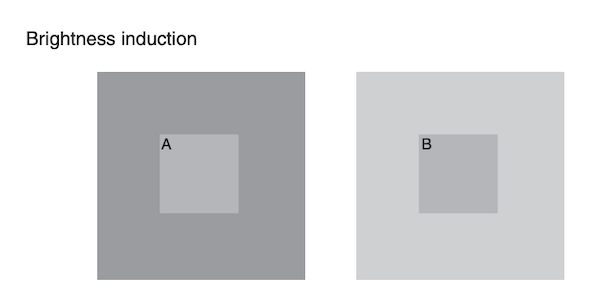
Image via Salmela et al / Journal of Psychiatry and Neuroscience
For this version, control subjects and depressed patients had a similar perception of the illusion.
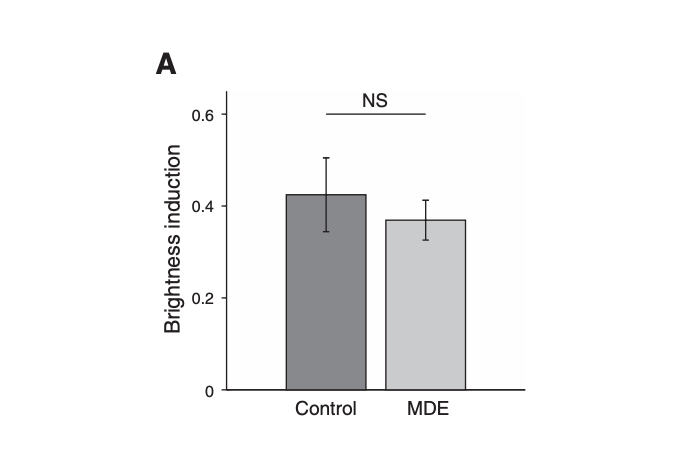
Image via Salmela et al / Journal of Psychiatry and Neuroscience
Then there was the “contrast suppression” test of two large striped squares—one oriented vertically and the other, horizontally. Inside them are smaller blurred squares, both featuring vertical lines. The smaller squares might appear different from each other but, you get the drill, they’re of the same shades.
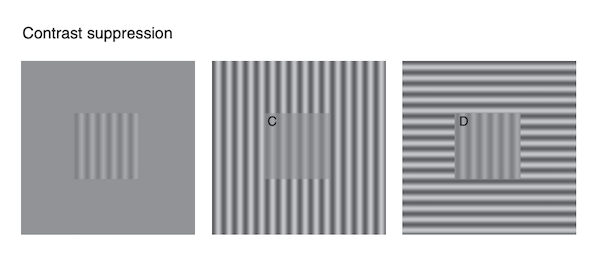
Image via Salmela et al / Journal of Psychiatry and Neuroscience
This time, participants experiencing major depressive episodes tended to be especially deceived by the illusion, indicating a weaker contrast signal. The scientists added that patients with “unipolar MDD [major depressive disorder], bipolar disorder and borderline personality disorder” also reported similar perceptions.
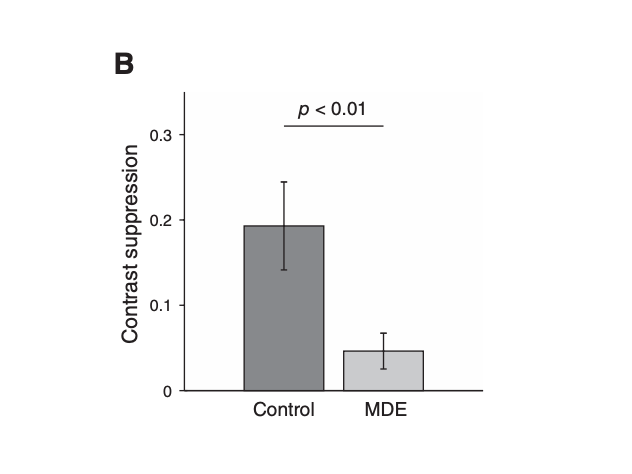
Image via Salmela et al / Journal of Psychiatry and Neuroscience
This suggests that there might be changes happening in the visual information transferred between the retinas and the cortexes or brains for depressed patients. The fact that rotation is a feature in the contrast suppression illusion could be a contributing factor, as well.
“Because contrast suppression is orientation-specific and relies on cortical processing, our results suggest that people experiencing a major depressive episode have normal retinal processing but altered cortical contrast normalization,” the team noted.
Through these observations, scientists might consider new treatment methods for depression and other mental disorders.
[via Science Alert, images via various sources]
Also check out these recent news


