
17th-Century Female Painter’s Portrait To Be On Show After Centuries Of Hiding
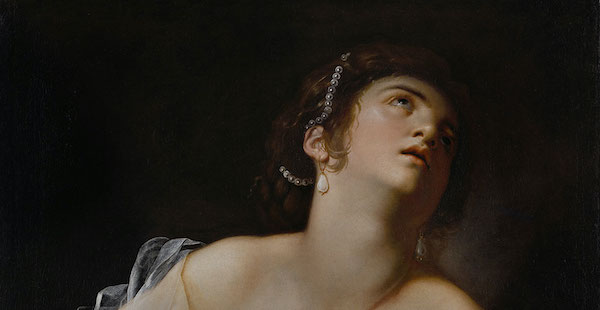
Image via J. Paul Getty Trust (CC BY 4.0)
The portrait is haunting – her head tilted back, bare-chested, eyes cast towards the sky, Lucretia contemplates if to plunge the dagger she is grasping into her chest. Soon, this 17th-century masterpiece will be returning for public view after being hidden in private collections for centuries.
It has recently been acquired by the J. Paul Getty Museum in Los Angeles, California, from an undisclosed seller, and will be available for public viewing when the museum reopens to the public.
According to the Smithsonian Magazine, Lucretia – a Roman heroine whose rape and suicide are said to have sparked a rebellion that laid the foundations for the Roman Republic – was a popular subject for painters in the 16th and 17th century. It’s all the more poignant being painted by Gentileschi, herself a victim of sexual violence. Considered the most consequential female painter of 17th-century Italy, Gentileschi was believed to have been raped by a mentor at 18.
As women were barred from pressing rape charges at the time, her father had to file the charges on her behalf. In the years that followed, Gentileschi was forced to undergo a long trial, including being subjected to torture to prove the “reliability” of her testimony, as reported by Artnet.
“Her achievement as a painter of powerful and dramatic history subjects is all the more remarkable for the abuse and prejudice that she suffered in her personal life – and which is palpably present in Lucretia’s suicide,” said Getty’s director, Timothy Potts.
“In this and many other ways, Artemisia’s Lucretia will open a window for our visitors onto important issues of injustice, prejudice and abuse that lie below the beguilingly beautiful surfaces of such works,” he added.
[via Smithsonian Magazine, Los Angeles Times, Artnet and Getty, cover image via Getty]
Also check out these recent news


