
MIT Makes Dozens Of Architecture & Urban Studies Books Free To Access
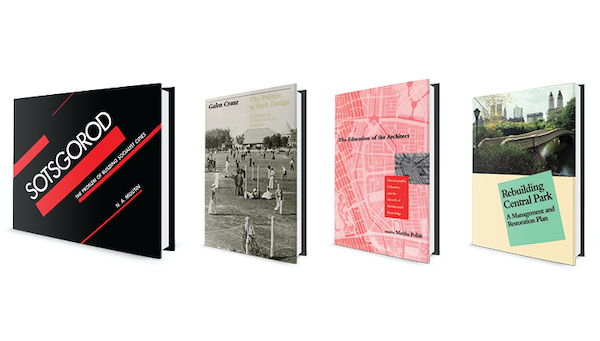
Image via MIT Press
Oftentimes, for a fresh new perspective, you’ll have to turn to the past. Every piece of work you see, after all, is a summation of inspiration and experiences. That’s where resources like the MIT Press’ new Open Architecture and Urban Studies book collection come in.
The university press has just released 34 classic architecture and urban studies titles as open-source e-books, an undertaking made possible with funding from the Mellon Foundation. These texts were published between 1964 and 1998, and although they’re now out-of-print, MIT Press has selected them for free access due to their timelessness and facility to explore architecture on a global scale.
Titles include American Design Ethic by Arthur J. Pulos, Architectural Space in Ancient Greece by Constantinos A. Doxiadis, Frank Lloyd Wright versus America by Donald Leslie Johnson, Designing Paris by David Van Zanten, and Architecture in the Scandinavian Countries by Marian C. Donnelly. Familiar names and movements which served as the building blocks of modern architecture are a common theme in these resources.
“The books in this collection are drawn from an absolutely formative period in the discourse of architectural and urban history and theory,” described Timothy Hyde, Associate Professor at the MIT Department of Architecture. “These are essential publications to have available again, as they represent to some degree the founding of an independent discipline.”
Unlike numerous digitized resources out there that are quite complicated to navigate, this collection is designed to be browsed intuitively. Several of the 34 titles can be viewed and interacted with via open-access platform PubPub, where readers will be able to annotate the e-books.
The MIT Press noted in a press release, “Now, with funding from the Mellon Foundation and the efforts of an open-access-savvy digitization team, the MIT Press was able to not only secure image permissions, but also to solicit fresh forewords that bring new insights to bear on many of these classic texts.”
Access all 34 e-books here.
[via World Architecture Community, cover image via MIT Press]
Also check out these recent news


