
Google’s New App Teaches You Words Of Near-Extinct Languages In The Real World
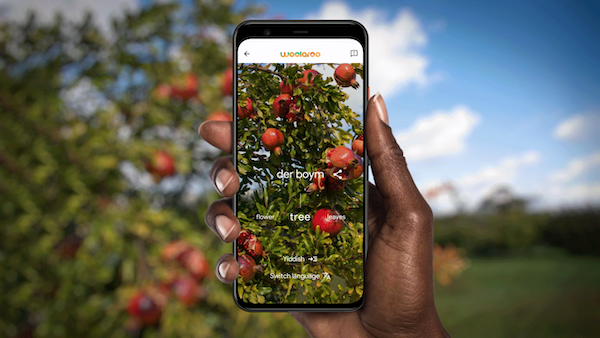
Image via Google
It’s often left up to descendants of a community to preserve their culture, but there’s only so much they can do. With its universal outreach, Google hopes to instill awareness about vanishing languages on a global scale.
On Wednesday, Google Arts & Culture launched ‘Woolaroo’, an open-source photo-translation that lets you find out the name, as well as the pronunciation, of an object in an endangered language by pointing your phone’s camera at it. The tool taps into Google Cloud’s machine-learning and image-recognition abilities to identify items in the real world.
Explaining the idea behind the app, Google says that retaining new languages is much easier when you have context and are more involved in the learning process. So when you’re out in nature and curious about your surroundings, that’s the perfect environment to pick up new words.
According to a National Geographic piece, one language ceases to exist every 14 days, and that the world risks losing half of its 7,000 languages “by the next century.” By inviting users to discover vocabulary in a natural way, they’ll more likely incorporate those words into their conversations.
At present, the Woolaroo app is able to make photo translations in 10 fading languages, namely Louisiana Creole, Calabrian Greek, Māori, Nawat, Tamazight, Sicilian, Yang Zhuang, Rapa Nui, Yiddish, and Yugambeh. But what makes it so special is its sense of community; users can add words that haven’t been recognized by the app to expand its repository.
You can check out Woolaroo here, or explore it within the Google Arts & Culture app for iOS and Android users.
Image via Google
[via BetaNews, Engadget and Fast Company, images via Google]
Also check out these recent news


