
Scientists Create Self-Healing Concrete That Fills Its Own Cracks With CO2
Images via Kamolrat / Shutterstock.com
Concrete, an essential building material, is known to produce a huge carbon footprint, leading researchers to seek ways to create longer-lasting versions to aid the planet.
Now, scientists at the Worcester Polytechnic Institute have developed what they believe to be the cheapest and most efficient method of ensuring concrete’s durability.
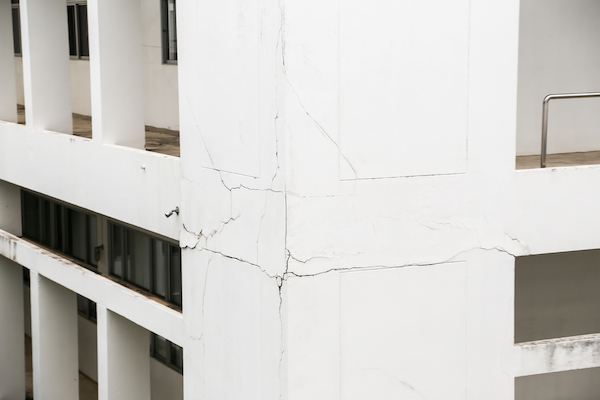
While cracks that form in concrete might not pose a serious threat to the structural integrity of a building right away, water seeping into the cracks and the rupture spreading could eventually compromise the building’s strength, as per New Atlas.
Therefore, scientists have tried to come up with self-healing concrete prototypes, so the material can “fix” itself while the cracks are still minuscule.
The team at the Worcester Polytechnic Institute took inspiration from the human body. Noticing how an enzyme in the red blood cells – carbonic anhydrase (CA) – is able to quickly transport CO2 from cells to the bloodstream, they sought to create a self-healing concrete prototype that mimicked it.
“We looked to nature to find what triggers the fastest CO2 transfer, and that’s the CA enzyme,” said Nima Rahbar, who authored the study, as per New Atlas.
“Since enzymes in our bodies react amazingly quickly, they can be used as an efficient mechanism to repair and strengthen concrete structures.”
The researchers added the CA enzyme to concrete powder before the material was mixed and poured. This allowed the enzyme to react with the CO2 in the air to produce calcium carbonate crystals, which can fill in tiny cracks whenever they appear in the concrete.
Following their tests, the scientists concluded that their new concrete mixture could repair its own mini cracks within a day, or 24 hours.
They say this is a vast improvement from previous technologies, which can take up to a month to fix a crack. The researchers predict the self-healing technology could possibly extend the life of a structure from 20 years to 80 years.
To find out more about the study, find it in the journal Applied Materials Today. See the self-healing concrete in action below.
[via New Atlas, cover image via Kamolrat / Shutterstock.com]
Also check out these recent news


