
Hyundai: Flying Cars Will Populate Cities In Less Than 10 Years
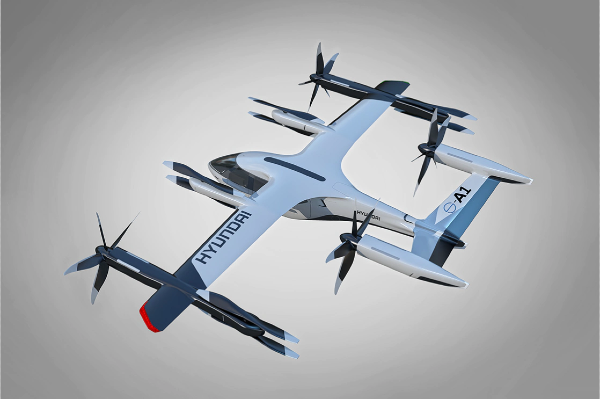
Image via Hyundai
At this year’s International Automotive Summit, Hyundai’s chief executive for Europe operations, Michael Cole, revealed that the company foresees flying cars in cities “by the latter part of this decade,” positioning 2030 as an informal deadline. A flying car prototype, unrelated to Hyundai, also recently completed an inter-city flight, staying 35 minutes in the air.
The South Korean motoring company is currently collaborating with global ridesharing company Uber to develop a flying taxi under the concept of Urban Air Mobility (UAM). This is in the works to be launched as Uber Air in 2023.
Hyundai hopes to ease congestions in cities by utilizing the airspace above it. Unveiled during 2020’s Consumer Electronics Show (CES), one of the eVTOL (electric vertical takeoff and landing) vehicles is called S-A1, which seats up to five people, including the pilot, and doesn’t look jarringly different from a small airplane. These vehicles would be suited for short flights within or between cities.
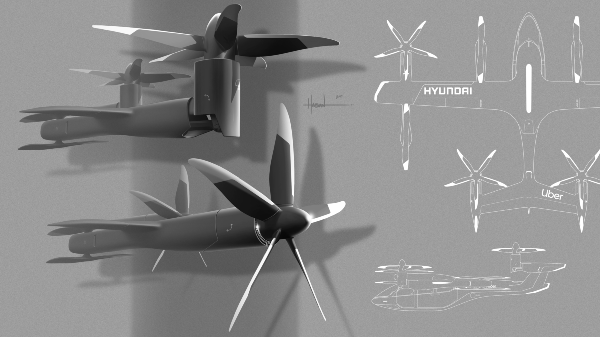
Image via Hyundai
As technology evolves, Hyundai has plans to rebrand itself as a “smart mobility solution provider,” rather than a just car manufacturer, as the boundaries of the transport industry are constantly expanded with innovations such as the S-A1. Its goal with eVTOL vehicles is to ”liberate people from gridlock” in a bid to reclaim time, rather than losing hours of our days to traffic and commuting, said Hyundai Motor Group Executive Vice Chairman Chung Euisun, at last year’s CES.
[via Dezeen, image via Hyundai]
Also check out these recent news


