
International Space Station Welcomes A New Robot To Carry Astronauts Around
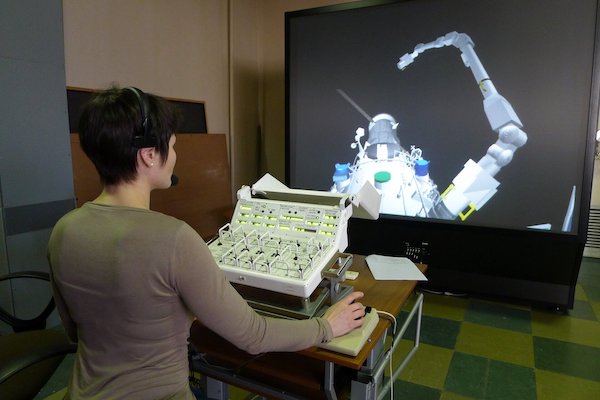
Image via European Space Agency
The International Space Station (ISS) has recruited a new robotic arm to help astronauts install, deploy, and replace multi-ton payloads.
With seven joints—consisting of an elbow, shoulders, and wrists—the 11-meter-long (36-foot-long) European Space Agency (ESA) bot has been christened the obvious name of the European Robotic Arm (ERA). Frankly, the space agency has missed the opportunity to call it the ‘Armstrong’.
The ERA isn’t a new space robot, though it’s pretty new to space. The equipment has been more than three decades in the making, Digital Trends reports, and after years of FOMO from not attending its three planned trips to the ISS due to technical difficulties, the robot will finally join the July 15 mission from the Baikonur Cosmodrome in Kazakhstan.
Apart from efficiently handling large and experimental objects, the ERA is intended “as a tool to transfer small payloads directly from inside to outside the International Space Station without the need for spacewalks… [and will] help spacewalkers by transporting them around like a cherry-picker crane,” the ESA details. It is also built with four infrared cameras to aid inspections and operations outside the ISS.
Its first tasks, apart from deployment and checkouts, would be to install the airlock and radiator for the latest module of the ISS.
The bionic arm is also primed to be the first robot to “walk” around the Russian zone of the ISS.
“Light yet powerful, the orbital arm has the ability to anchor itself to the station and move back and forward by itself, hand-over-hand between fixed base-points,” the ESA elaborates.
Click to view enlarged version

Click to view enlarged version. Image via European Space Agency
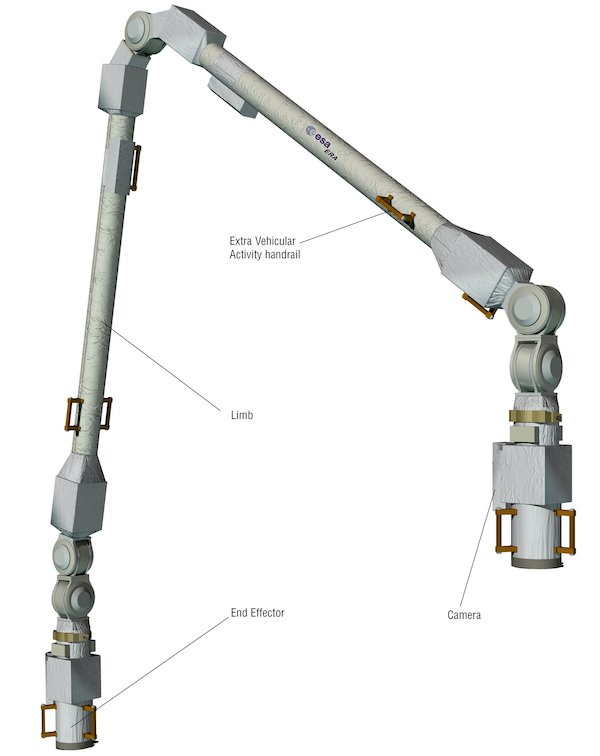
Image via European Space Agency
[via Digital Trends, images via European Space Agency]
Also check out these recent news


