
Michelangelo’s Thumbprint Might Have Been Discovered On His Wax Sculpture
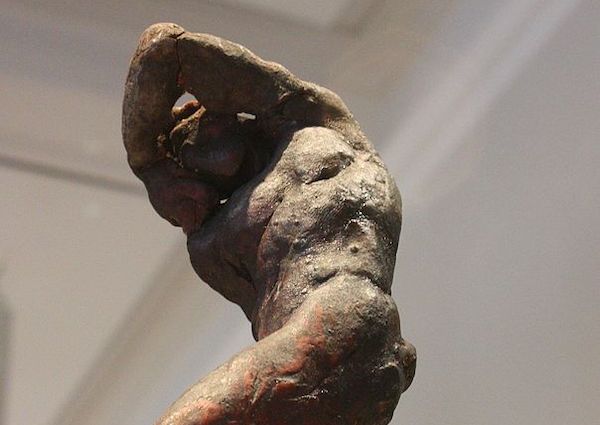
Image by Valerie McGlinchey Britain Loves Wikipedia via Wikimedia Commons (CC BY-SA 2.0 UK)
A thumbprint apparently belonging to the great Michelangelo was spotted on a small wax model at London’s Victoria and Albert Museum. The discovery was first revealed in BBC Two’s new series, Secrets of the Museum.
The museum wasn’t spared from a heatwave that struck the city last spring, which left its wax sculptures “sweating and looking uncomfortable,” senior curator Peta Motture told the Radio Times. And they wouldn’t take well to the looming summer heat, since “the galleries are south-facing.”
As a protective measure, conservators moved the Italian Renaissance master’s Wax model of a slave, sculpted between 1516 and 1519, from its display in an upper gallery to storage in the basement, where temperatures would be lower. The figure served as a preparatory sketch for a larger marble sculpture intended for the tomb of Pope Julius II, Artnet News reports.
Five months later, over 500 years after the small sculpture was made, a fingerprint could be seen on its buttocks when the museum brought it back to its galleries. It is deduced that temperature or humidity changes had altered the chemical composition of the wax.
“It is an exciting prospect that one of Michelangelo’s prints could have survived in the wax. Such marks would suggest the physical presence of the creative process of an artist,” Motture reflected with the BBC.
The wax model was among 40 figures created to aid Michelangelo’s work process for the marble work. It is one of only a few surviving preparatory pieces attributed to the artist, as he would normally destroy his wax drafts.
According to the Victoria and Albert Museum, Michelangelo would slowly raise the wax model out of water to guide him as he carved the actual statue.
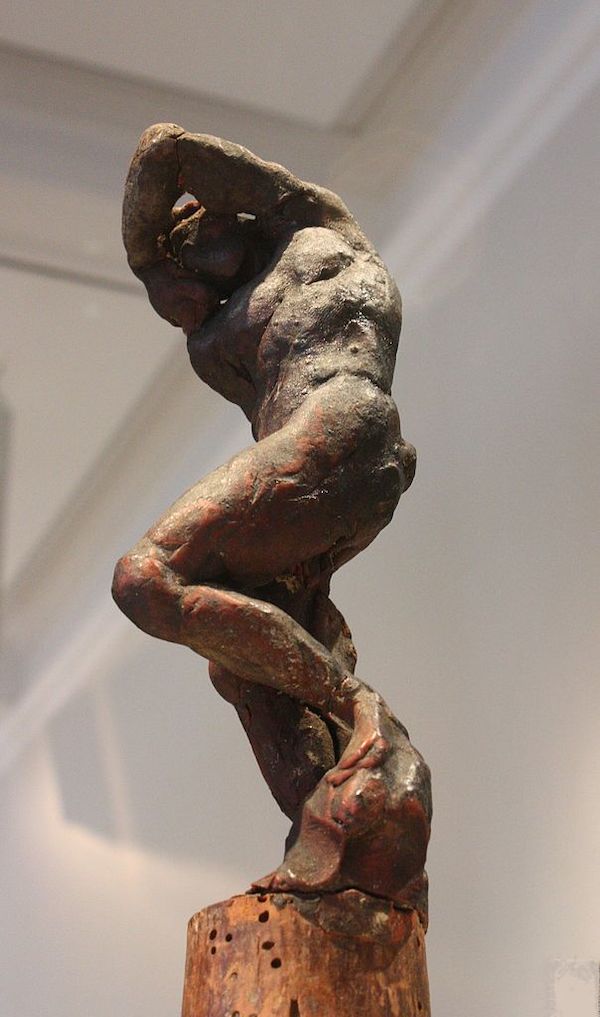
Image by Valerie McGlinchey Britain Loves Wikipedia via Wikimedia Commons (CC BY-SA 2.0 UK)
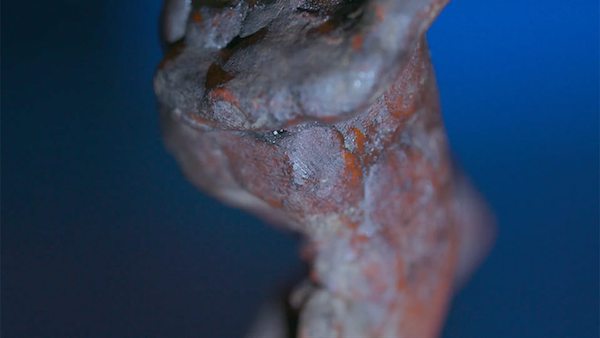
A closeup of the sculpture’s buttocks, where a fingerprint can be seen. Image via BBC Media Centre
[via Artnet News, images via various sources]
Also check out these recent news


