
Stonehenge Piece Dating Billions Of Years Reveal Why Monument Is Still Surviving
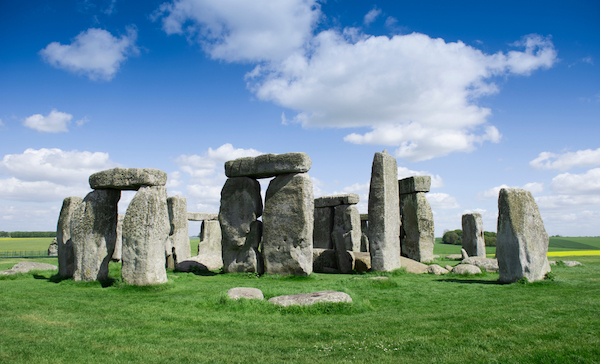
Image via Shutterstock
English monument Stonehenge had a piece of Stone 58 removed in 1958 during reinforcement work and no one knew where it went.
60 years later, it was returned, and researchers had the rare chance to carry out geochemical analyses of a Stonehenge pillar. Since it’s now a protected monument, it’s no longer possible to extract stone from it, so it’s not every day this rare chance comes by.
Robert Philips, a representative of the company helping to restore Stonehenge in 1958, took one of the stone cores with him, English Heritage explains in a news release. It’s since been on quite a journey, following Philips on his emigration to the US and journeys from New York to Illinois to California. But on the day before his 90th birthday in 2019, he decided to return the fragment back home to its original place, and his sons traveled back to the UK to fulfill their father’s wish.
“Archaeologists and geologists have been debating where the stones used to build Stonehenge came from for years,” says Professor David Nash of Brighton University in the English Heritage statement. He explains that the geochemical fingerprinting of Stonehenge stones, and the core will “hopefully tell us where the different stones came from” when compared with samples from across England.
Now, a couple of years on, the research has been carried out—CT scans, X-rays, microscopes, analyses, as Nash tells Live Science—and the team has found that the sarsen rock in Stone 58 was made of 99.7% quartz; a ‘cement’ was made of quartz and used to hold quartz grains together.
This resulted in an “interlocking mosaic of crystals,” making the rock more durable, according to Nash. No wonder the stones have been able to weather the trials of time and weather.
Analysis also revealed the sediments’ ages. Scientists found that some grains had likely eroded from Mesozoic era rocks (252 million to 66 million years ago): that’s the time of the dinosaurs. Some of the sand grains had been formed up to 1.6 billion years ago.
“I've wondered if the builders of Stonehenge could tell something about the stone properties, and not only chose the closest, biggest boulders, but also the ones that were most likely to stand the test of time," Nash speculates.
[via Live Science, image via Shutterstock]
Also check out these recent news


