
Excavated Warrior Was Non-Binary, Respected & Buried With Elite Artifacts
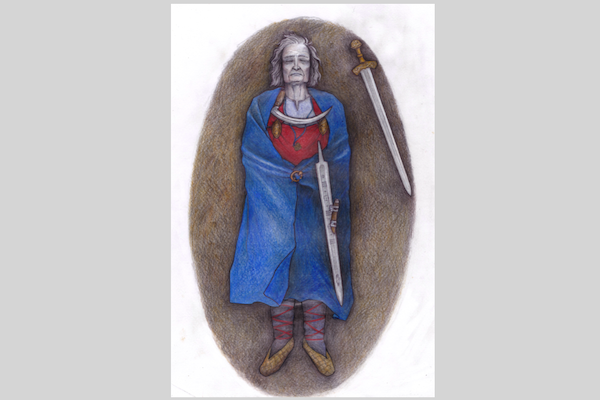
Drawing by Veronika Paschenko (CC BY 4.0)
While digging for a water pipe project in Hattula, southern Finland, a sword with a bronze handle was stumbled upon in 1968. Further investigation led to the Suontaka grave being uncovered, which held a person dressed in typically feminine clothing of the time—but being buried with two swords, traditionally considered masculine.
This led researchers to believe that it was either a double burial of a man and a woman, or the grave of a strong female leader. However, new analysis published in the European Journal of Archaeology reveals findings from the archaeological team at the University of Turku, Finland: “The buried individual had the sex-chromosomal aneuploidy XXY, i.e. the Klinefelter syndrome.”
According to a statement made by the University, Klinefelter syndrome varies between individuals and symptoms are often mild, so they may go unnoticed. A person with XXY chromosomes, such as the discovered warrior, is usually anatomically male, and the syndrome may also cause breast growth, diminished muscle mass, or infertility.
The DNA sample the team worked with was small, researcher Elina Samela notes. To analyze it, they were only able to read a few genetic sequences. Therefore, as lead study author Ulla Moilanens describes, the researchers developed a system of mathematical modeling to reach their conclusions.
One of the two swords discovered was also revealed to be a later addition to the grave. The famous sword of Suontaka was hidden after the original burial, which reinforces the significance this warrior had in their society. They were clearly loved, and dearly missed.
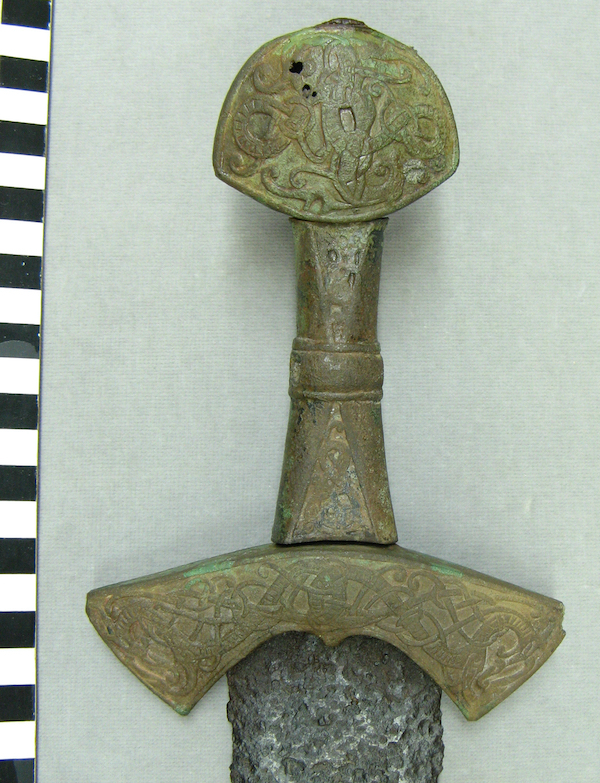
Image via The Finnish Heritage Agency (CC BY 4.0)
From the recovery of the burial, findings show that the warrior not only had a social identity that rested outside of traditional gender norms, but they were also accepted, respected, and valued by their community.
[via Smithsonian Magazine, images via The University of Turku]
Also check out these recent news


