
NASA Is Plotting To Kill The International Space Station—When The Time Comes
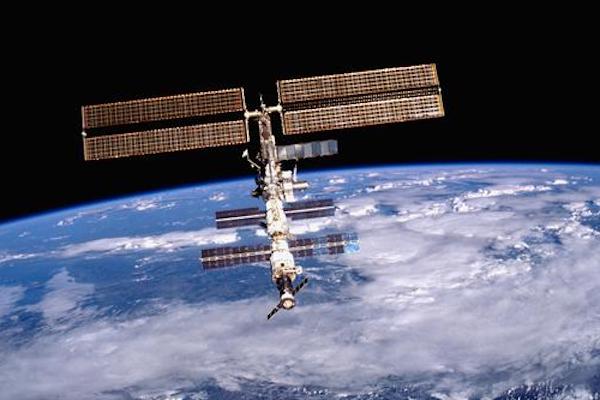
Image via NASA
What goes up must come down, but what happens when the ‘come down’ arrives for something the size and magnitude of the International Space Station (ISS)?
The huge entity orbiting in space is aging, and it will need to retire at some point. Although it’s not clear exactly when, NASA is attempting to find a solution to removing it from space and disposing of it after decades of priceless contribution, according to a report by United Press International (UPI).
NASA is working with its international partners to “ensure a safe deorbit plan of the station” while considering “a number of options,” spokeswoman Leah Cheshier reportedly told UPI in an email, but with no further elaboration on the options.
In 2019, a safety panel at NASA approved a plan in which Russia would launch a modified Progress spacecraft to the ISS. The Progress would then guide the weary station into Earth’s atmosphere, and most of it would melt away.
Then, what remains of it would disintegrate over the Pacific Ocean, in a spot known as Point Nemo, the furthest region of the ocean from land. This might’ve occurred as soon as 2028, according to the initial plan.
However, it was then decided that Russia would abandon its agreement with its space station partners when it ends in 2024. Now, NASA’s plan has another layer of uncertainty added to it, and it appears that the company hasn’t decided on a final solution.
Alternatives to the Russian spacecraft currently include the SpaceX Dragon, Japanese H-2A or Northrop Grumman Cygnus. A Cygnus was installed on the ISS’ Harmony module just yesterday, August 12, and is scheduled to remain for three months.
In a statement provided to Space.com last November, NASA has confirmed that the ISS will operate “through at least December 2024” and has clearance to fly until 2028 comes to an end. That buys the organization a bit more time, at least.
[via Futurism, image via NASA]
Also check out these recent news


