
Melting Mongolian Ice Reveals Animal Remains & Hunting Tools From The Bronze Age
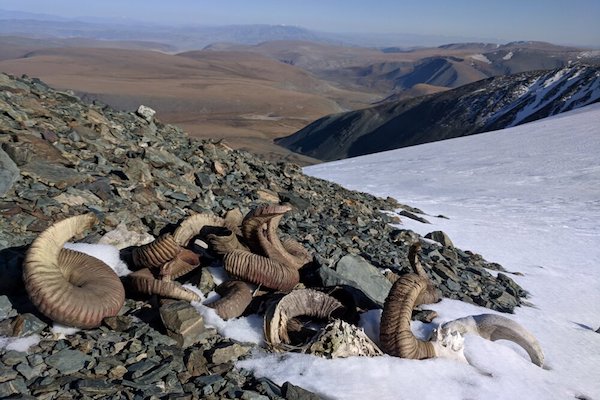
Image via William Taylor
Ice has the capabilities to preserve precious objects down to their finest details, as seen in the lion cub which was kept frozen almost perfectly. With the climate crisis seeing alarming patches of ice disappear globally, researchers are trying to get hold of these objects before the ice patches—and artifacts—vanish.
A group of University of Colorado scholars, the National Museum of Mongolia, and the organization’s partners were led by archeologist William Taylor to study and protect the emerging artifacts from Mongolia’s peaks.
One such example is the tools made and used by early hunters who lived in the area in time past. These objects were constructed from soft material, which rarely survive erosion under regular conditions, let alone the unforgiving weather in the alpine.
But, if discarded in ice, the items become preserved for centuries in their original states, allowing for analysis.
As reported by Taylor, ice patches in western Mongolia revealed to the team an arrow still in one piece, dating from the Bronze Age. Alongside this, they also discovered sinew lashing and red pigmentation, which led to new discoveries about the region’s historical population.
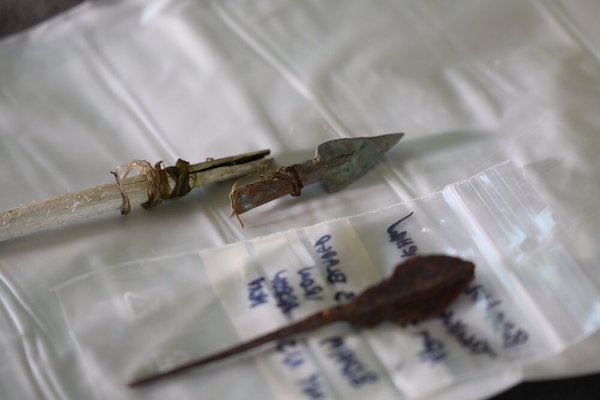
Image via Peter Bittner (CC BY-ND)
“People in the region have long been classified as herding societies,” Taylor explains. “But my colleagues and I found that Mongolian glaciers and ice patches also contained hunting artifacts, like spears and arrows, and skeletal remains of big game animals like argali sheep spanning a period of more than three millennia.”
Ice is also crucial to large animals, who rely on it to cool off in the summer months. Caribou, elk, sheep, bison, and even domestic reindeer can be found trying to catch a break from the heat. With the melting ice, ecological changes like shifting animal habitats, or “ecofacts”, are revealed.
Taylor hopes that through the analysis of this data alongside artifacts, scientists can study how people in the past adapted to ecological changes of their time, “and maybe expand the toolkit for facing the 21st-century climate crisis.”
Horseback survey of ice patches, northern Mongolia pic.twitter.com/Jyh7oiecTg
— William Taylor (@wtt_taylor) August 6, 2018
[via The Conversation, images used with permission from William Taylor]
Also check out these recent news


