
Rain Hits Greenland’s Ice Sheet For First Time Ever, Causing Massive Melt
Image via Alexander Hafemann / Unsplash.com (CC0)
In a worrying trend, Greenland’s ice sheet experienced another massive melting event last week, marking the second time this has happened in just the span of two weeks.
In the latest occurrence, rain fell at the Greenland Summit Camp for the first-ever time in recorded history.
The camp, which is a research station located near the top of the ice sheet, was part of the huge rainfall that swept the country, with seven billion tons of rain falling in a week.
The incident also marked the third time this decade that temperatures reached above freezing point at the summit, as per the National Snow and Ice Data Center.
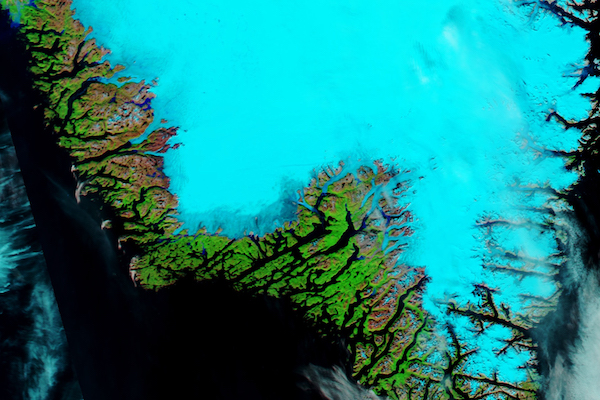
The ice sheet on August 12, before the melting event. Image via NASA Earth Observatory
Unfortunately, according to Gizmodo, major melting events such as this can cause incredible amounts of damage to the ice sheet, even if they only take place over a few days.
The darker water from the rain absorbs the sun’s heat, causing the ice around it to melt even more quickly. This then destabilizes the snow and firn below the sheet’s surface.
“During melt events, these processes can occur over parts of the ice that do not typically experience melt, making the impact more widespread,” said Lauren Andrews, a glaciologist at NASA’s Global Modeling and Assimilation Office.
More troubles could surface after the melting ice refreezes. While ice created by compressed snow and firn is usually white and reflective, ice caused by rain remains dark and smooth. This results in that type of ice absorbing more of the sun’s heat due to its darker color, making it even more prone to melting in the future.
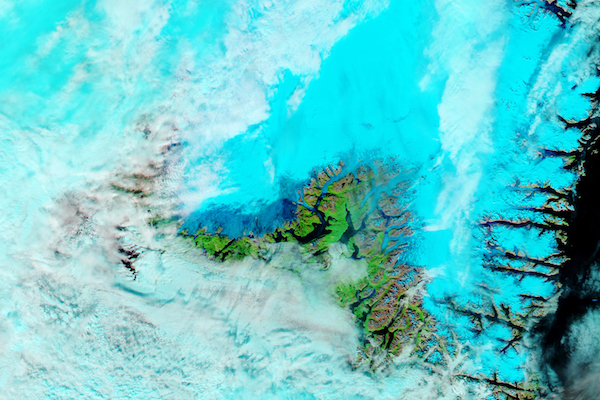
The ice sheet on August 15, after the melt, exacerbated by rainfall. Image via NASA Earth Observatory
In total, about 337,000 square miles—about half of the ice sheet—has been affected. Even more concerning, there’s never been such an extensive melting event occurring so late in the year.
This undoubtedly shows that Earth’s climate crisis is worsening, with The Arctic warming up faster than anywhere else on the planet.
If the human population doesn’t take drastic measures quickly enough to stop global warming and climate change, these “freak” incidents will start to occur more frequently, damaging the planet beyond repair.
[via Gizmodo, images via various sources]
Also check out these recent news


