
Stolen Ancient Coins Found Among Illegal Loot In House In Israel
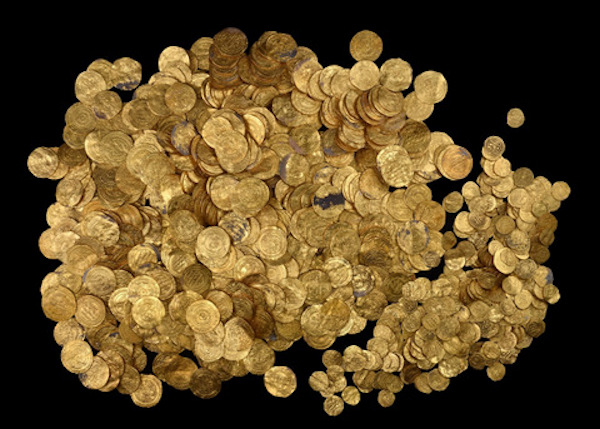
Image via Israel Antiquities Authority
It has been recently announced by the Israel Antiquities Authority (IAA) that loots of ancient coins have been uncovered hidden in a house in Bnei Brak, Israel, during an operation by the IAA’s Robbery Prevention Unit.
Some of the coins found were from the Byzantine and the Islamic periods, alongside those of the Hasmonean and Roman eras.
These are traded illegally and turn into a rather large income opportunity for antiquities looters, IAA Trading National Inspector Ilan Hadad tells The Jerusalem Post.
The incriminated suspect worked as an illegal antique dealer, and traded in artifacts regardless of their legality. Some were also smuggled from abroad to be traded.
“Looters, who dig at archaeological sites and destroy them for the sake of greed, cut off the antiquities from their archaeological context,” Hadad adds. “Entire chapters from the history of the Land of Israel” are erased as a result.
Robberies form an intricate system detailed by the IAA: supported by middlemen, teams of “diggers” infiltrate archaeological sites, armed with tools to break into their targets.
These are mainly Second Temple period towns and Jewish burials, where rare coins are often found. Due to their elusive nature, coins are of extremely high value in antiquities’ markets.
Kobi Sharvit, director of the Marine Archaeology Unit of the IAA, has previously reiterated that the “Law of Antiquities states that all antiquities belong to the state.” He also continues to say that “not reporting or removing antiquities from their location, or selling or trading them is an offense punishable by up to five years imprisonment.”
It hasn’t been specified exactly how many coins were found, or the value of the entire loot.
[via The Jerusalem Post, image via Israel Antiquities Authority]
Also check out these recent news


