
T-Rexes Were Actually Sensitive Creatures & Selective Eaters, New Study Confirms
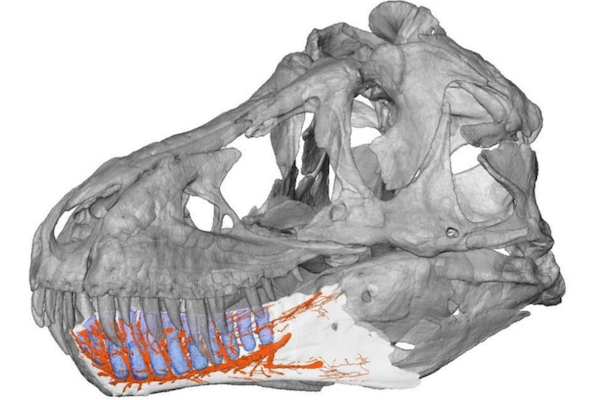
Image via Fukui Prefectural University
Dinosaurs aren’t usually associated with delicate eating or sensitivity to their surroundings. Given their size, it’s hard—and pretty comical—to imagine them picking at their food.
But researchers from Fukui Prefectural University, Japan, have found that the Tyrannosaurus Rex (T-Rex) wasn’t the beastly chomper who mauled through everything, even bone, that it has been made out to be.
Published in Historical Biology, findings showed that a CT scan of the lower jawbone revealed a detailed network of nerves, matching those of crocodiles and ducks. Although the nerves have since decomposed, it can be inferred from the neurovascular canals in the lower jaw. It’s also assumed that the upper jaw was of a similar structure.
These nerve sensors enabled it to eat “better” as it could recognize the different parts of its prey, dining differently depending on the current situation.
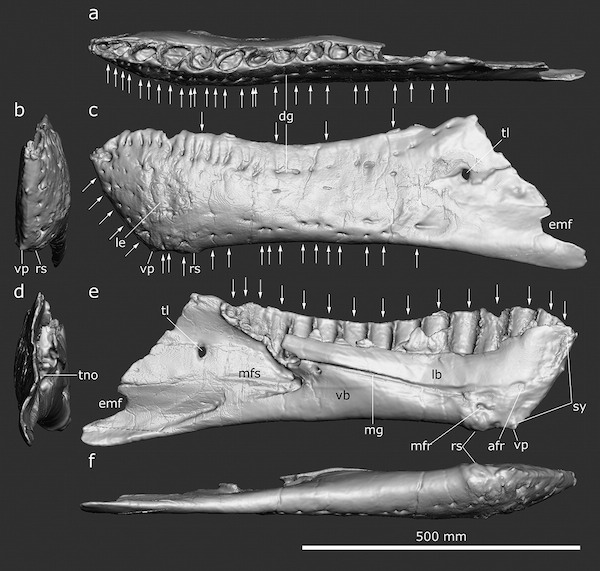
Image via Fukui Prefectural University
This also makes it “an even more fearsome predator than previously believed,” states study lead author Dr Soichiro Kawabe of the Institute of Dinosaur Research at the University.
But don’t misunderstand the T-Rex; there’s a softer side to it. Apart from its ability to consume its mauled prey more efficiently, the findings also indicate that the “jaw tips were adapted to perform a series of behaviors with fine movements,” adds Dr Soki Hattori, Assistant Professor at the Institute.
These include more demure, domestic things, like “nest construction, parental care, and intraspecific communication.” Perhaps the T-Rex nuzzled its young with its snout, or gently bonded with a mate.
After all, it’s nice to have a loving home and nurturing family to come back to at the end of a day of terrorizing your prey.
[via IFL Science, image via Fukui Prefectural University]
Also check out these recent news


