
Virtual Reality Therapy Is Here, Brain Scans Reveal It Helps With Social Anxiety
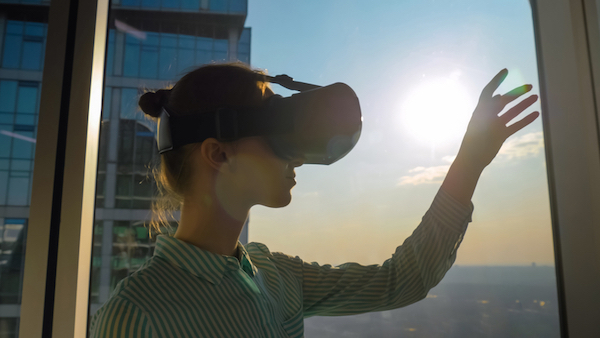
Image via ID 217223219 © Aleksey Popov | Dreamstime.com
A new experiment, published in JMIR Mental Health, tested the effects of virtual reality (VR) based exposure therapy on patients with social anxiety disorder, and the results are fascinating.
According to PsyPost, patients showed less social anxiety and negative rumination after the therapy, with them associating more positive words with themselves.
Ji-Won Hur, the study’s lead researcher, set out to explore how effective VR therapy would be in treating a particular aspect of Social Anxiety Disorder (SAD).
This aspect, called self-referential processing, works differently in those diagnosed with SAD. When participants were completing a self-referential processing task under functional magnetic resonance imaging (fMRI), they were each presented with neutral, positive, or negative words. The patients then had to pick which words they felt were relevant to themselves.
Following this test, the patients then took part in six VR therapy sessions over several visits, each with differing degrees of difficulty. They were placed in anxiety-inducing scenarios where they had to introduce themselves to others.
After completing the treatment, they underwent another fMRI scan while completing a subsequent self-referential processing task.
Turns out, upon looking at the data, researchers found that patients with SAD showed increased activation in certain parts of the brain during the processing task after undergoing the VR therapy treatment. The patients’ frontal, temporal, and occipital lobes lit up more, and they also showed a significant decrease in negative rumination.
Additionally, the patients showed positive changes during the processing task, felt lower levels of social anxiety, and experienced less negative rumination. The researchers posited that the therapy could’ve helped SAD patients accept more positive words as being self-relevant.
“We believe that our findings may contribute to a better understanding of the therapeutic efforts of VR-based interventions, which could be included in the routine treatment of social anxiety disorder,” the researchers said.
To find out more about the results, check out the study here.
[via PsyPost, cover image via ID 217223219 © Aleksey Popov | Dreamstime.com]
Also check out these recent news


