
Scientists Discover Man Can Dilate Pupils At Will, Once Thought Impossible
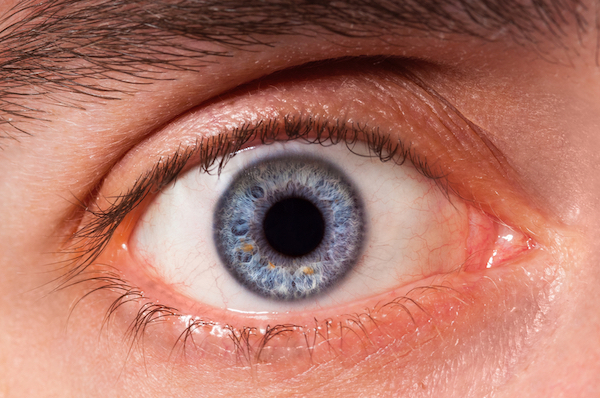
Image via ID 35838521 © Parkinsonsniper | Dreamstime.com
Scientists have discovered that a 23-year-old student in Germany can dilate his pupils at will, an impressive feat that was once thought to be impossible.
Most humans have two tiny muscles in the eye that control the pupil, enlarging them when it’s dark to allow more light into our eyes, and constricting them when it’s too bright. This process is usually automatic; most of us don’t think about our pupils dilating or constricting when we enter a new environment.
Previously, scientists had uncovered that some people could change the size of their pupils, but only by using indirect methods. According to Christoph Strauch, senior author of the new study, if one thought about sun, their pupils may constrict, or thinking of a dark room or engaging in mental calculations could cause them to dilate.
It was thought that it was impossible for humans to change the size of their pupils just by controlling the eye muscles, until the German student came along. According to Live Science, the young man, known by his initials DW, said he realized he had this unique skill at about 15 or 16 years old.
“I showed a friend that I can ‘tremble’ with my eyeballs, and he noticed that my pupils became small. Constricting the pupil feels like gripping, tensing something; making it larger feels like fully releasing, relaxing the eye,” DW told researchers at Ulm University in Germany.
Initially, DW had to focus on objects in front of him to control the size of his pupils. As time went on, he began to be able to do it even without the objects. All he does is concentrate on his eyes, not even needing to picture a bright or dark room to help.
The researchers confirmed DW’s ability through a series of test, which showed that he wasn’t dilating his pupils using any of the indirect methods. They even tested to see if he was controlling the eye movements with increased mental effort, but it was shown not to be so.
DW was found to be able to dilate his pupils up to 0.09 inches, and constrict them to 0.03 inches in diameter. Upon using functional magnetic resonance imaging (fMRI), scientists found that when he was controlling his pupils, there was increased activity in certain parts of the brain involved with decision making.
The researchers are looking to study more individuals with this ability, and said that some have already reached out to them, believing they could have the same “superpower.” To learn more about the study, head here.
[via Live Science, cover image via ID 35838521 © Parkinsonsniper | Dreamstime.com]
Also check out these recent news


