
Women’s Aid Debuts High-Fashion Campaign With Hidden Signs Of Domestic Abuse
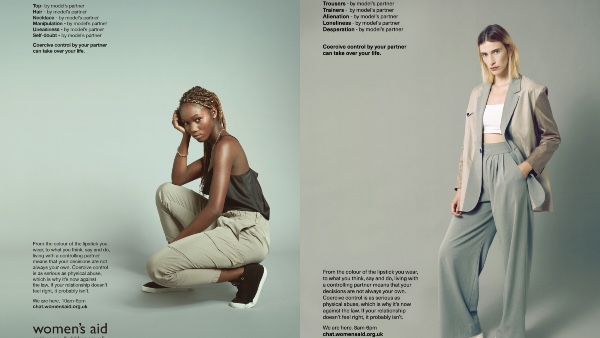
Image courtesy of Engine Creative
You see all the glitz and glamor, but things aren’t always what they seem.
A poignant campaign by UK creative services agency Engine Creative for English nonprofit Women’s Aid, which aims to protect women and children against domestic abuse, depicts a glossy editorial shoot with women dressed in various outfits.
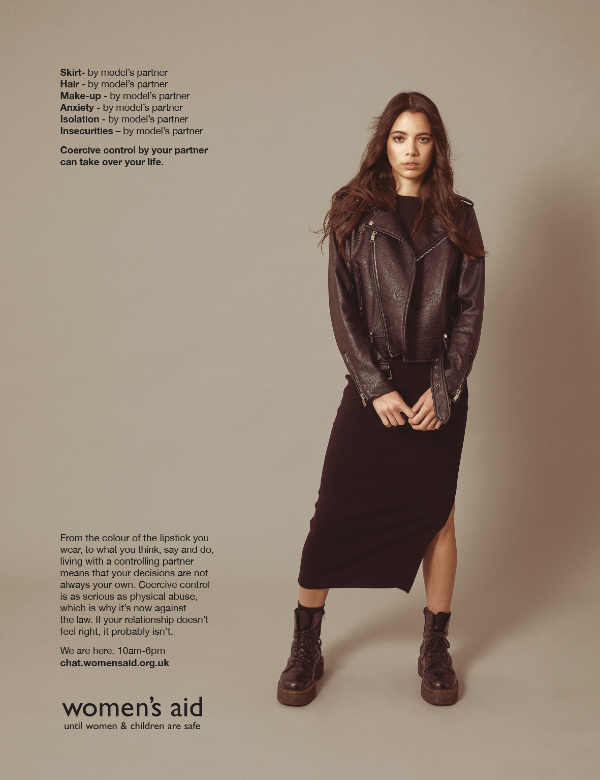
Image courtesy of Engine Creative
The reality of most fashion photoshoots, unseen by the public eye, is that models are styled and directed by others. Rarely can they have a say about how their hair looks or what they can wear.
Women’s Aid grimly extends this concept to life at home for some women in its Not Model’s Owncampaign. Victims are pressured by partners to look, behave, and speak a certain way. What’s worse is that they’re made to put up with this pretense all the time, not just for short-term gigs.
It’s a type of domestic abuse that’s harder to detect, often taking place without victims even knowing it. In line with this subtlety, viewers will only recognize that something is amiss about the shoot when reading the text, which reveals that everything—from a model’s skirt to makeup, anxiety, isolation and insecurities—was contributed by her partner.
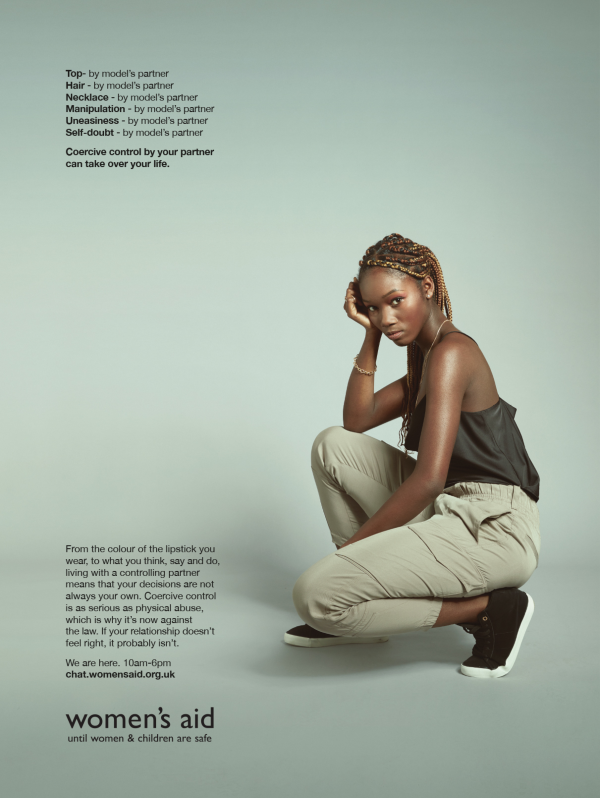
Image courtesy of Engine Creative
“From the color of the lipstick you wear, to what you think, say and do, living with a controlling partner means that your decisions are not always your own,” the prints read. “Coercive control is as serious as physical abuse, which is why it’s now against the law. If your relationship doesn’t feel right, it probably isn’t.”
The lesser-known aspect of domestic abuse, called coercive control, has been illegal in the UK since 2015, says Engine Creative. “Coercive control is a pattern of behaviors used to control, manipulate or frighten another person… It makes victims second-guess themselves and their experiences as they become dependent on the perpetrator,” the agency details.
Signs of coercive control are more difficult to spot, as the scars left on victims are often emotional, instead of physical, and the pain is gradually inflicted on them.
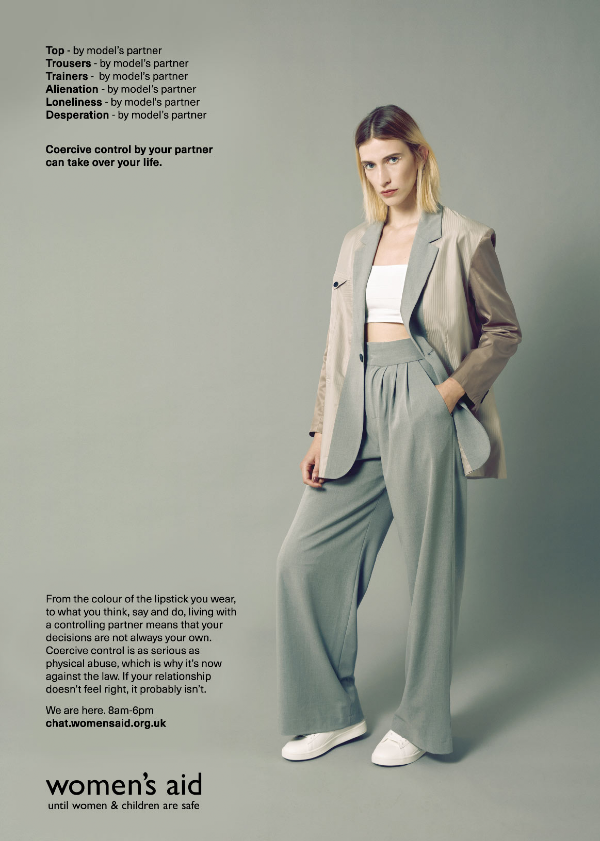
Image courtesy of Engine Creative
Common instances of it include controlling even the slightest aspects of a person’s life, and isolating them from their friends and family. While coercive behavior is against the law, reports of it have been on the rise. In March 2020, the police in England and Wales recorded 24,856 such offenses, an uptick from the 16,679 from the year before.
Through this gripping project, Women’s Aid and Engine Creative hope to raise awareness about the less detectable side of domestic abuse and the emotional effects it leaves survivors with. People who recognize these symptoms are also directed to chat.womensaid.org.uk to talk to an an expert.
“The campaign is vital in raising awareness of coercive control to help survivors, and those around them, recognize the signs of abuse,” explains Farah Nazeer, chief executive at Women’s Aid, in an email. “If any of the signs highlighted in this campaign are familiar to you, Women’s Aid is here for you, please reach out for expert support.”
For greater reach, the activation will appear in women’s magazines, among other fashion shoots; and in select fast-food outlets.
[via Engine Creative]
Also check out these recent news


