
Nissan Develops Recycling Tech To Extract & Reuse Rare-Earth Metals From EVs
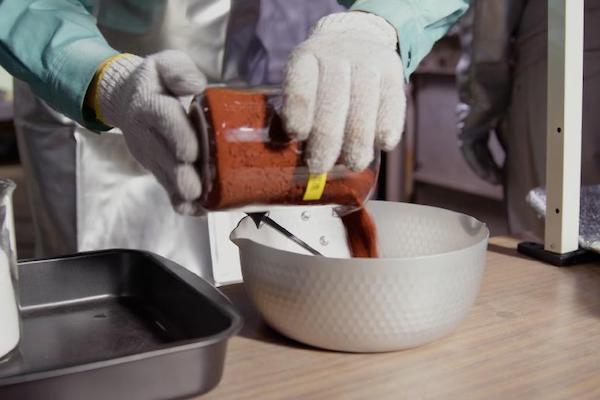
Image via Nissan
Collaborating with Waseda University in Japan, motoring company Nissan announced a new rare-earth metals recycling process intended to reuse material from electric vehicle (EV) motors.
Most EV motors incorporate the use of neodymium magnets, which contain rare-earth materials like neodymium and dysprosium, and are highly scarce today. To be able to reuse these materials is important not only to balance supply and demand, but also due to the environmental impacts of mining and refining the material.
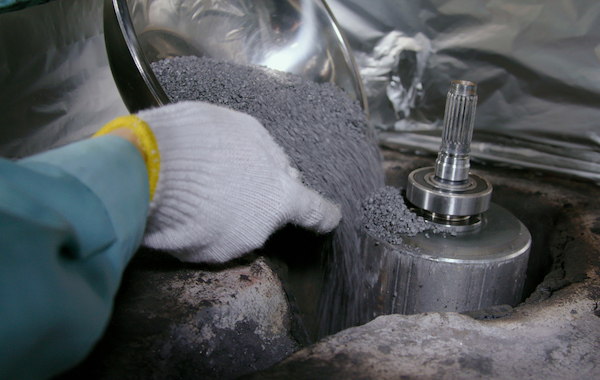
Image via Nissan
This process calls for a used motor to be heated to almost 2,600ºF in order to melt it down. Then, an iron oxide is added to the motor-turned-liquid so that the rare-earth elements (REE) can be oxidized, and a borate-based flux is mixed in. This then allows the mixture to be separated into two distinct layers.
On the first molten oxide layer, the REEs float to the top and can be extracted easily. Simultaneously, the higher density iron-carbon alloy layer sinks to the bottom, neatly out of the way.
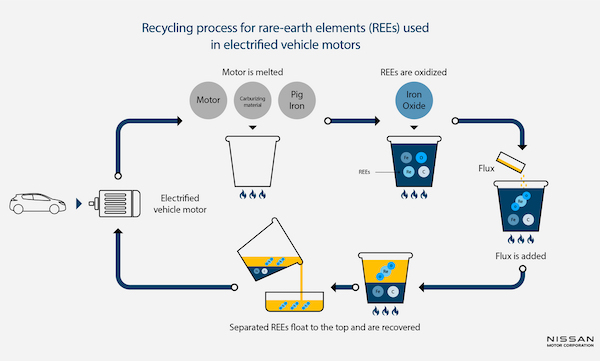
Image via Nissan
Nissan found that the technique can recover up to 98% of an EV motor magnet’s REEs. This method also reportedly reduces time required by up to half, compared to the company’s current method of extraction. With this new process, the magnets no longer need to be removed, disassembled, or de-magnetized.
In line with its Nissan Green Program 2022, the car company is aiming to continue with “large-scale facility testing” alongside Waseda University while collecting used EV motors to hone the process.
All this hopes to see practical application of this recycling technology by the middle of this decade.
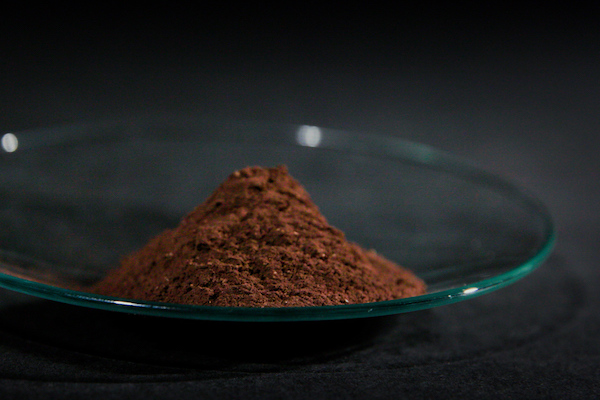
Image via Nissan
[via Engadget, images via Nissan]
Also check out these recent news


