
Animals Are Forced To ‘Shape-Shift’ Their Body Parts Due To Climate Change
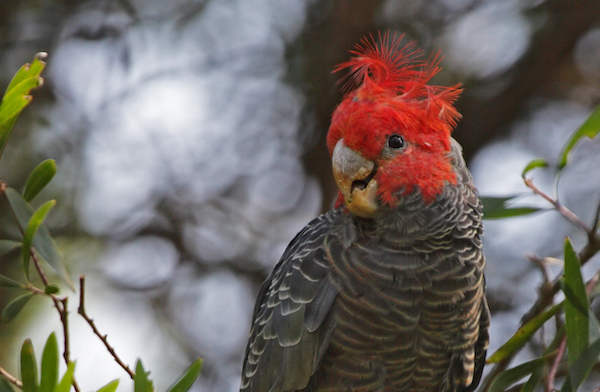
The gang-gang cockatoo, one of the bird species that’s rapidly evolving to keep up with climate change. Photo 18913141 © Dirkr | Dreamstime.com
Evolution is part of how the world works, and reports have suggested that even human bodies are changing as we speak. However, the climate crisis is accelerating this process in the animal kingdom so fauna can adapt to rapidly warming environments, and that’s worrying.
Animals are “shape-shifting,” say researchers in a new study published in the Trends in Ecology & Evolution journal. These include Australian birds like gang-gang cockatoos and red-rumped parrots, who over the past 150 years have grown their bills by an average of 10%.
Other bird species in North America and Australia are also morphing, as are wood mice with their enlarged eras, and bats with their wider wings—all to, presumably, create a greater surface area to release excess body heat. Doing so would be “beneficial as the climate warms,” noted lead author Sara Ryding from the School of Life and Environmental Sciences at Deakin University in Australia, in a statement obtained by CNET.
The theory of animals responding to heat by enlarging their appendages corroborates with observations by 19th-century American zoologist Joel Asaph Allen, who noticed that animals living in warmer climates had bigger and longer ears, legs, and wings.
Given how they’re evolving so quickly to cope with the heat, it’s feared that animals may no longer keep up one day.
“I don’t want the takeaway to be that, ‘Oh, animals are evolving in response to climate change, that means they'll be fine,’ because that simply isn’t true,” Ryding stressed.
Some of the shape-shifting isn’t visually noticeable, but it’s happening speedily in the name of survival, nonetheless. “Climate changes are happening at a faster rate than ever before,” cautioned Ryding. She noted that while evolution “can be a slow process, taking thousands—or more—years,” the speed at which temperatures are rising “can drive faster evolutionary change.”
Differences in appendage size were already evident at the dawn of the climate crisis, according to the numerous papers that the team studied for this research. “It’s alarming that we are seeing these responses so early on in the climate crisis,” said Ryding.
“We don’t know if they’ll be able to keep up as the crisis worsens.”
Even to limit global warming in the next decades to 1.5 degrees, the team warned that “immediate, rapid and large-scale reductions in greenhouse gas emissions” would be required.
“I hope that these findings really highlight how climate change is impacting animals and how important it is that we work to reduce our emissions and avoid the climate crisis as much as possible,” said Ryding.
[via CNET, cover photo 18913141 © Dirkr | Dreamstime.com]
Also check out these recent news


