
Milky Way Is Sending A Strange Radio Signal And Scientists Can’t Figure Out Why
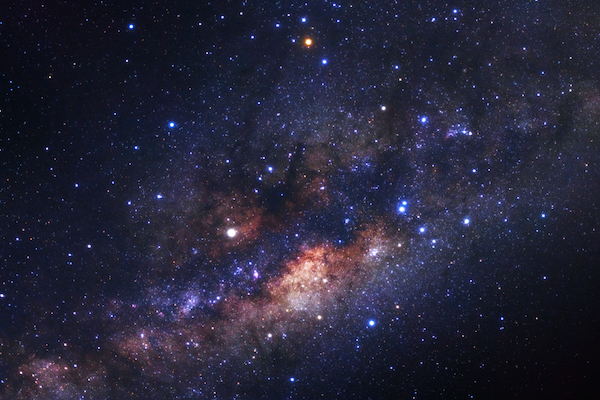
Image via ID 106397964 © Sripfoto | Dreamstime.com
In the last several years, astronomers have chanced upon an unusual radio signal that repeats itself, near the center of the solar system’s Milky Way.
According to a recently released study, this energy source doesn’t seem to match anything past scientists have studied. It also appears to be finicky, appearing as a bright spot on the radio spectrum for weeks, and then suddenly disappearing in a day.
This peculiar behavior doesn’t match any celestial body researchers currently know of, and could possibly be “a new class of objects being discovered through radio imaging.”
The source of the signal—named the ASKAP J173608.2−321635—was first detected by the Australian Square Kilometre Array Pathfinder (ASKAP) radio telescope.
As per Live Science, between April 2019 and August 2020, scientists observed that the mysterious signal appeared for 13 times, with each occasion not lasting more than a few weeks. It would then disappear and reappear, with no apparent schedule or pattern to its coming and going.
Researchers attempted to match the newly-discovered energy source with observations from other telescopes, such as the Chandra X-Ray Observatory, the Neil Gehrels Swift Observatory, and the Visible and Infrared Survey Telescope for Astronomy in Chile, but the signal vanished altogether.
As the astronomers set out to find the source of the signal, they theorized it could have come from low-mass stars that flare up occasionally. However, it was determined to be unlikely as the flaring stars usually have x-ray counterparts that can be spotted. Dead stars are also unlikely candidates, for a similar reason as the flaring stars.
So far, the closest guess is an unknown class of object known as a galactic center radio transient (GCRT). It’s a rapidly glowing radio source, which brightens and decays near the center of the Milky Way, but typically only in a few hours. A few of the known GCRTs have similar brightness to the signal, and their radio flares aren’t accompanied by x-rays either.
While the mysterious signal still can’t be determined, hopefully, future surveys of the Milky Way will give scientists more to work with. Until then, it’s anyone’s guess.
[via Live Science, cover image via ID 106397964 © Sripfoto | Dreamstime.com]
Also check out these recent news


