
Valuable Polished Stone Spheres Uncovered In Vanishing Neolithic Scottish Tomb
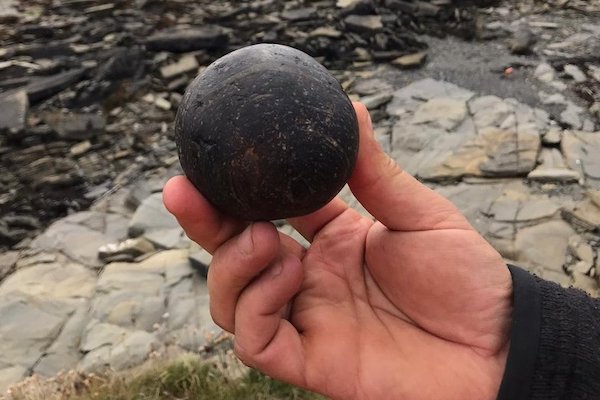
Image via University of Central Lancashire
A tomb at Tresness, on the Orkney island of Sanday, Scotland, revealed a rather peculiar find: two perfectly formed and polished stone balls which are around 5,500 years old.
Around just 20 polished Neolithic stone balls have been uncovered during excavations in Orkney to date. The tomb this particular find was situated in dates back to around 3500 BCE, and is one of the island’s oldest-known monuments.
According to the Smithsonian Magazine, researchers believe the stones were used as weapons and symbols of power. It has been evidenced in the skull injuries, most probably caused by blunt force, in human remains found in Orkney. However, to find these polished balls incorporated in burial is a more unusual occurrence.
Hugo Anderson-Whymark, the senior curator of prehistory at the National Museum of Scotland, describes the cricket-sized balls as “perfectly spherical and beautifully finished.” Although slightly split, he promises that they “will be amazing when conserved.”
Another polished stone ball! This one is the size of a cricket ball, perfectly spherical and beautifully finished. It's split along bedding in the banded sandstone but will be amazing when conserved https://t.co/viAarY50qu
— Dr Hugo Anderson-Whymark (@hugowhymark) August 25, 2021
The team notes on its blog that the excavation also revealed pottery fragments, knives, and the antler of a deer.
An archaeologist at the University of Central Lancaster, Vicki Cummings, tells the Scotsman that this tomb was most probably connected to the Neolithic settlement at Cata Sand, which is about a mile and a half away from the site.
Today, the tomb is near the coast. But in the Neolithic times, the landscape would’ve been different. Although it would’ve still been a coastal site, the area would have been more of a “wooded environment” with lush greenery.
Even though excavations at the site have been going on since the 1980s, there has been a recent need to extract as many artifacts as possible; the cliff where the area is located is facing imminent collapse, and researchers will need to gather as much information as they can before then.
“At the end of the day, sadly this is a site that is disappearing into the sea,” Cummings continues. “So we are extracting this information before it is basically lost forever.”
A cracking find from the tomb! Only 20 or so Neolithic polished stone balls have been found in Orkney and few have been recovered from secure contexts https://t.co/VzIe9OHRqI
— Dr Hugo Anderson-Whymark (@hugowhymark) August 18, 2021
[via Smithsonian Magazine, image via University of Central Lancashire]
Also check out these recent news


