
This Six-Year-Old Became The World’s Youngest AI Programmer, Thanks To Lockdown
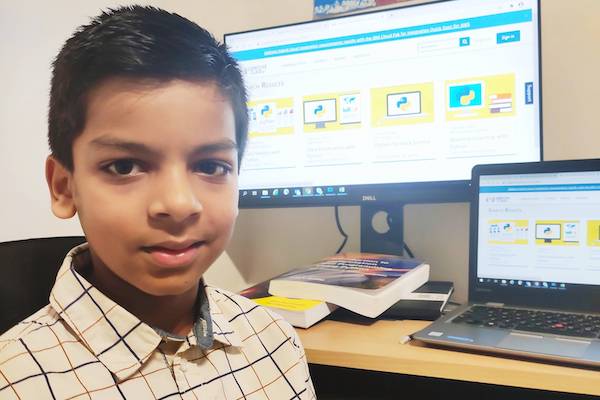
Image via IBM
Earlier this year, a six-year-old child from the UK was awarded a Guinness World Record for being the youngest Python programmer, thanks to the amount of time spent inside during the COVID-19 pandemic.
Kautilya Katariya comes from Northampton, England, one of many areas placed under lockdown regulations which included the closure of schools last year.
As a result, he began reading course materials from IBM and received certifications for his efforts in Python and artificial intelligence by the time November rolled around, according to this IBM blog post.
The courses he took included Foundations of AI, a professional certification on edX; and the Python for Data Science course from IBM Cognitive Class; all part of the IBM Developer Skills Network.
Kautilya, now seven years old, tells Analytics India Magazine that the reason he started was because “cool things are either run by a computer programmer or made using programming.”
When he began to show an interest in programming, his parents provided him with some books about computing, science, and technology. After these were exhausted, and free time was still aplenty, his parents gave him a laptop with an internet connection to keep exploring on his own.
According to his folks, Trupti and Ishwari, Kautilya first explored YouTube videos to do with the subject. Then, he registered for some free courses from universities and the ones stated above. “Being a good reader, he was absorbing knowledge like a sponge,” they say.
“As a parent, we need to identify and provide all necessary means to excel in the area of the kid’s interest,” they add. They recommend considering coding as “another mental exercise to develop logical thinking and problem-solving capability in the kids” instead of an extra subject to teach.
In terms of the future, Kautilya has plans to keep learning and put his skills to practicality. He says that he’s working on building a chatbot for his website, which will be able to answer questions about programming and AI.
“I think computer programming is really fun and is similar to solving puzzles,” Kautilya continues. “If we think that we are just trying to solve puzzles, coding won’t feel that difficult and you may start enjoying it.”
[via Interesting Engineering, image via IBM]
Also check out these recent news


