
Tesla Co-Founder To Open Huge Battery Factory That Makes Power Even Cleaner
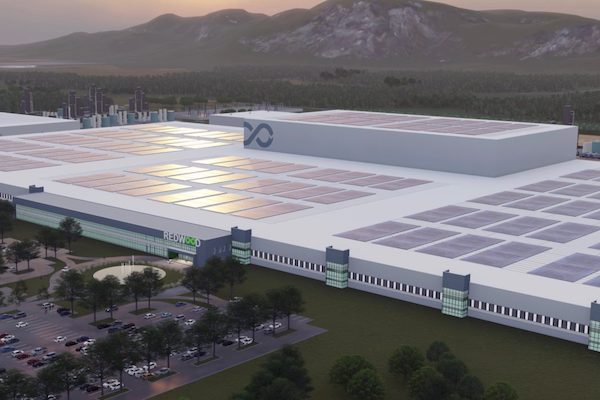
Image via Redwood Materials
Tesla’s co-founder and chief technical officer, JB Straubel, announced on Tuesday that his new company has plans to expand into the battery materials market. Specifically, a 100 GWh battery materials manufacturing facility in the US is in the pipeline.
Redwood Materials, Straubel’s company, was founded with the mission to “create a circular supply chain for electric vehicles and clean energy products” to make them more sustainable and “drive down” the cost of its most costly component, which is their batteries.
Currently, the company recycles batteries. But it states that it’s “planning ahead to address the problems and opportunities coming when millions of EV’s batteries need an end of life solution.”
There’s also the recurring question of what to do with unused electronics tucked away and forgotten in our drawers at home.
Additionally, the current battery supply chain is impractical and what appears to be the total opposite of sustainable. Using a diagram in its press release, the company highlights the “enormous” cost and carbon footprint of a single component.
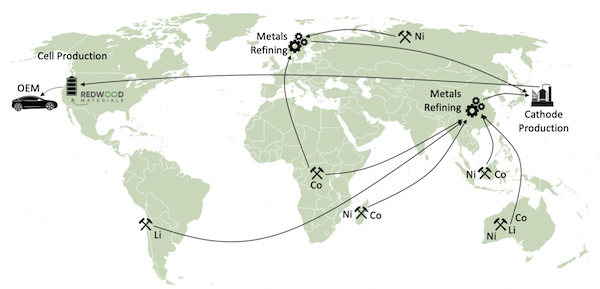
Image via Redwood Materials
Therefore, Redwood’s plans are to produce “strategic battery materials” locally within the US and supply its battery cell manufacturing partners with elements such as anode copper foil and cathode active materials.
The two materials will be made from existing lithium, copper, nickel, and cobalt that can already be extracted from old batteries during the recycling process. Thus, the loop is closed.
And this is where the huge factory, which has yet to finalize a location, will come in.
Although the starting amount is already 100 GWh of materials annually, the company states that it expects to reach 500 GWh. This would create enough batteries to power around five million electric vehicles, which is around half of the US’ annual vehicle production, it claims.
“Quickly ramping up a domestic battery materials supply chain and using the highest possible percent of local, recycled raw materials is the best way we can meet the US’s 2030 electrification goals,” Redwood declares.
Today we share our plans to produce anode & cathode materials. Redwood's US battery materials manufacturing facility will produce 100 GWh/yr of cathode active materials for 1M EVs by 2025 & 500 GWh by 2030, supporting nearly half the US' vehicle production https://t.co/evPVe2pFnk
— Redwood Materials (@RedwoodMat) September 14, 2021
[via Electrek, images via Redwood Materials]
Also check out these recent news


