
Fancy Some ‘Marble’ Tiles? These Are Actually Made From Fish Scales
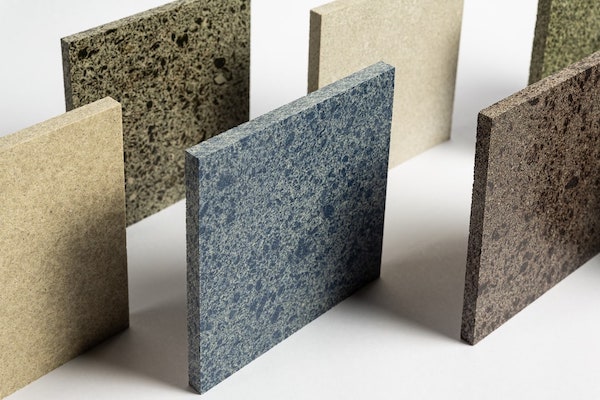
Image via Scale
Erik de Laurens, who helms Scale, created his first ‘marble’ prototype back in 2011, when he was completing his masters’s in product design at London’s Royal College of Art. After a stint of six years as a materials researcher at an architecture firm, De Laurens felt he needed to address the “architectural problematics” and pollution caused by construction.
In 2018, he made the leap, and partnered with his cousin, entrepreneur Edouard de Dreuzy, to open Scale—“an ocean-friendly brand.”
According to a study by researchers from the Stazione Zoological Anton Dohrn in Italy, fish waste has been increasing globally, with estimates showing that nearly two-thirds of the total fish caught are discarded as waste.
Scale is a solution to that problem, with its “marble” tiles made entirely (99.5%) from fish scales. The unique material—named Scalite—is eco-friendly, and prevents some of the fish waste from ending up in the landfills.
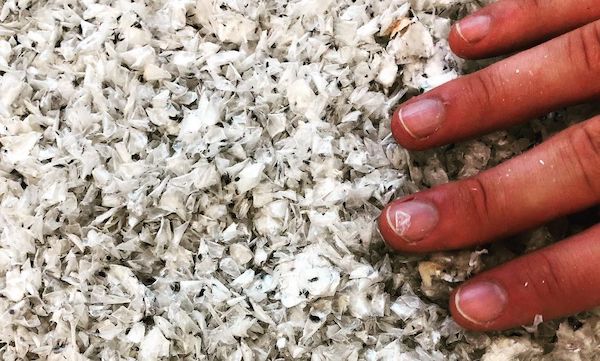
Image via Scale
“We call it reversible, which means that with one tile of Scalite, you can produce another tile of Scalite,” De Laurens told Fast Company.
He added that due to the material being free from chemicals, resins, and glue, the tiles are able to be 100% recycled when they’re no longer in use.
How Scalite is made is a bit of marvel, making use of the biopolymers (collagen fibers) and minerals found in fish scales. This fiber is extracted and combined with the minerals before being added to natural binder and dyes to create the material. After it’s been compressed in molds, voilà, you get vibrantly colored tiles.
Currently, Scale’s tiles are only available in 12 inches by 12 inches in size, due to the limitations of the machinery. De Laurens said that larger tiles would require larger machines, but the brand is working on a separate system to create curved or wavy Scalite sheets for more complex projects.
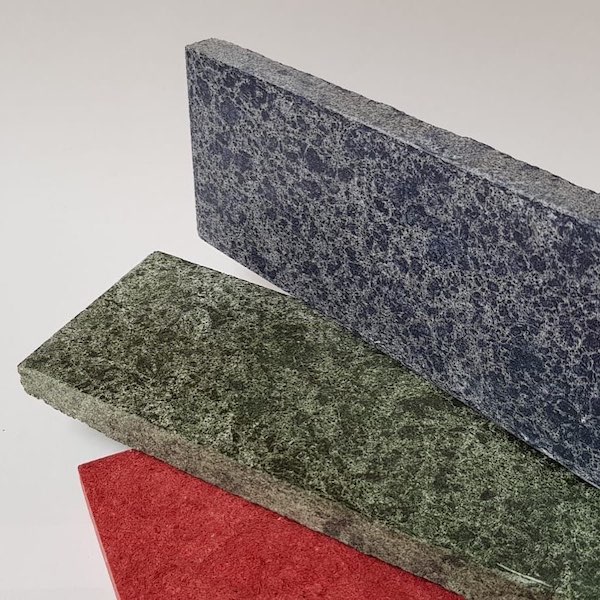
Image via Scale
The tiles are applicable anywhere in the home, except for in the bathroom. De Laurens explained: “It’s like MDF, it swells. It’s tricky because the more water-resistant you are, the less biodegradable.”
In spite of the challenges, Scale still hired a biochemist, with aims to create a version of Scalite that’s both water-resistant and 100% eco-friendly.
While Scalite is on the more affordable end when compared to marble or stone, it still costs more than ordinary materials, which may deter consumers from going the eco-conscious route. However, Laurens does hope consumers can see the advantages of using a 100% biodegradable material, too.
“If you’re really serious about your environmental impact. Then this is a really good solution because it’s basically natural.”
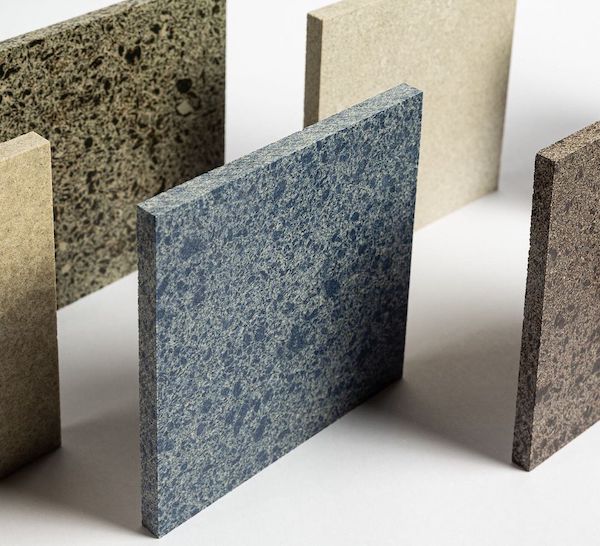
Image via Scale
[via Fast Company, images via Scale]
Also check out these recent news


