
Breakthrough Brain Implant ‘Restores’ Sight In The Blind By Bypassing Their Eyes
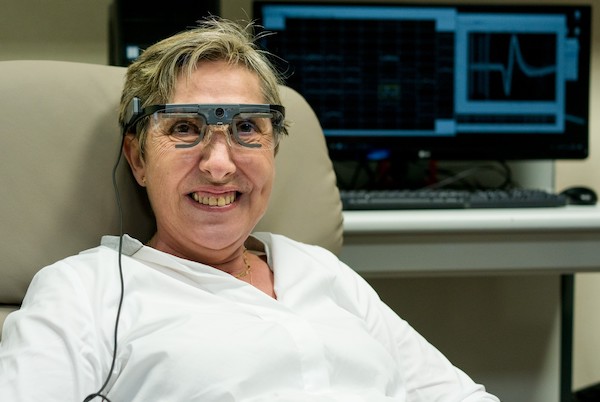
Image via RUVID
Blindness is often characterized by eyes not working as they should, resulting in a loss of vision. Although largely irreversible, there have been some developments that allow users to see, such as artificial retinas. However, most of these tend to work with the eye.
As strange as it sounds when it comes to working with a loss of vision, the solution might just come in the form of something that doesn’t even include the eye in the equation.
A group of scientists from the Miguel Hernández University, Spain, have developed a new brain implant that will allow blind users to perceive simple shapes and even some letters by triggering function in the visual cortex.
While it does use an artificial retina, mounted onto a pair of ordinary glasses, its main tool is the network of 96 micro-electrodes that are implanted in the user’s brain, as the paper published in The Journal of Clinical Investigation this month details.
When light is detected through the retina, it’s converted into electrical signals. These are passed onto the micro-electrodes, which stimulate the visual cortex in the brain, which is how the person can see without their eyes.
It’s crucial to note that the implant doesn’t affect the brain’s function or stimulate other neurons that aren’t meant to be provoked in this process. The micro-electrodes can also be removed. Plus, the implant requires a lower electrical current than similar electrode setups that reside on the brain’s surface. This could make the implants safer to use.
Last year, when the setup was complete, a version with 1,000 electrodes was tested with success on some primates, although they weren’t blind.
However, this year, the team managed to test it on a woman who had been completely blind for more than 16 years. After around half a year of training with the new device, it was reported that she was able to identify the silhouettes of some objects and some letters.
“The research team is currently recruiting new blind volunteers to take part in these experiments,” the news release concludes. “In upcoming studies, they hope to use a more sophisticated image coding system that can stimulate more electrodes simultaneously, in order to reproduce more complex visual images.”
[via New Atlas, image via RUVID]
Also check out these recent news


