
What Would Happen If Light Slowed Down? MIT Designed A Game To Explore It
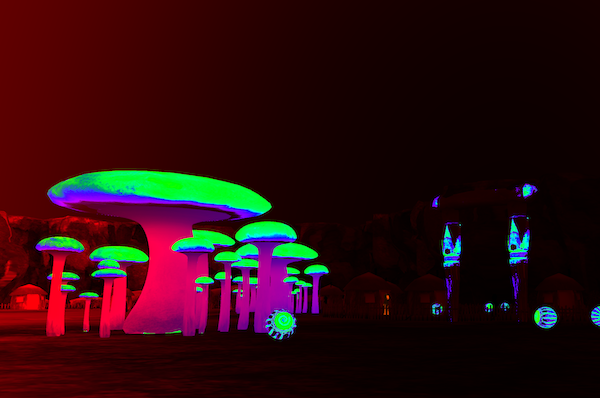
Image via MIT Game Lab
Traveling “at the speed of light” is, for most things, the best way to convey just how mind-blowingly quick something is. “Lightning-fast” is another, and that has to do with light too.
It’s for good reason, too—it’s the fastest moving thing in the universe, at around 186,000 miles per second when traveling through a vacuum. But what would happen if light wasn’t quite so fast? Apart from throwing quite the spanner into simile language as we know it, of course.
This near-impossible scenario can be explored in a game made by Gerd Kortemeyer, director of educational development and technology at ETH Zurich, and his colleagues at the MIT Game Lab during his time as a visiting professor at MIT.
Aptly titled A Slower Speed of Light, it explores navigating a pretty bizarre world that has gone through the effects of, well, a slower speed of light. No prizes for guessing that one.
In this game, players have to collect orbs shaped like beach balls. For every 100 orbs collected, the speed of light slows down even more, which makes the landscape a little more difficult to traverse each time.
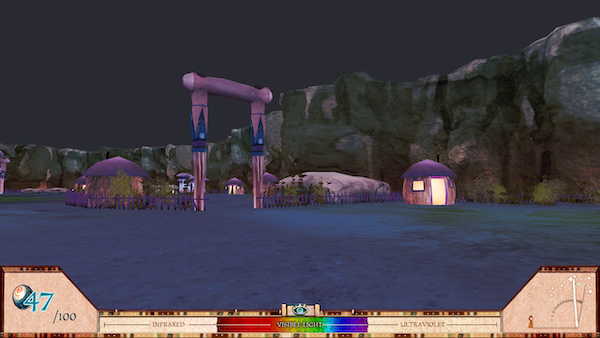
Image via MIT Game Lab
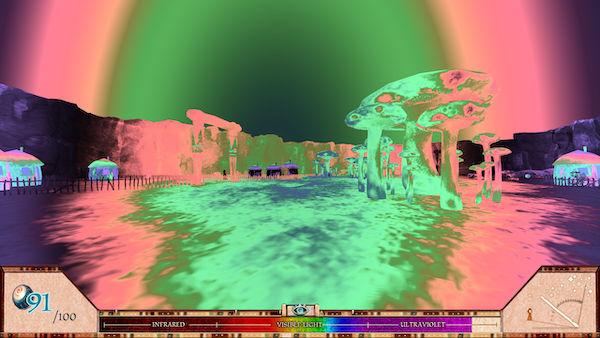
Image via MIT Game Lab
Kortemeyer has noted that, in the real world, light wouldn’t exactly slow in the same way as the game. It would change depending on the material it’s passing through but it doesn’t change the effects of special relativity, which is an Einstein theory that explains how speed affects mass, time, and space. But if we could witness this, we’d notice changes in things like time, distance, and brightness. This is what the team included in the game.
Some of these effects include concepts like the Doppler effect, which is the red- and blue-shifting of visible light, and the shifting of infrared and ultraviolet light into the visible spectrum.
Put simply, “the thing coming toward you looks bluer, or the thing moving away from you looks redder,” Kortemeyer describes to Live Science.
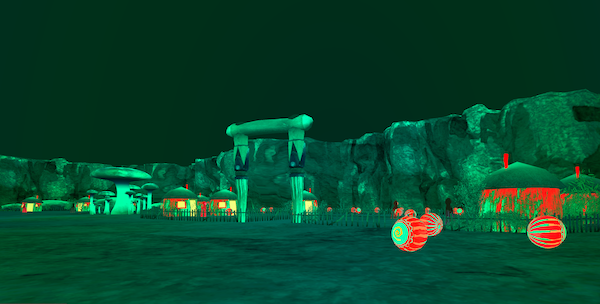
Image via MIT Game Lab
Another is the searchlight effect: increased brightness in the direction of travel. Time dilation is also an element, which indicates a difference in the “perceived passage of time from the player and the outside world.” It’s not noticeable during gameplay, but at the end, the time shown “elapsed” during the game is different from what a regular clock would show.
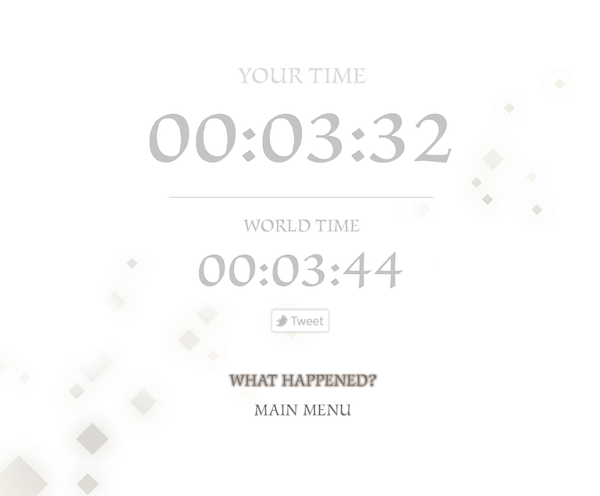
Image via MIT Game Lab
A Slower Speed of Light was created using OpenRelativity, an open-source toolkit for Unity. Beta releases for Mac, Windows, and Linux can be found on MIT Game Lab’s website.
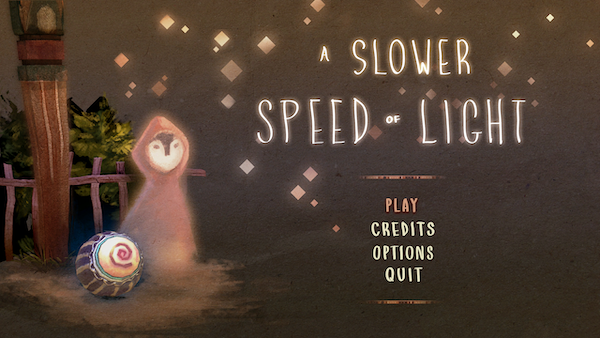
Image via MIT Game Lab
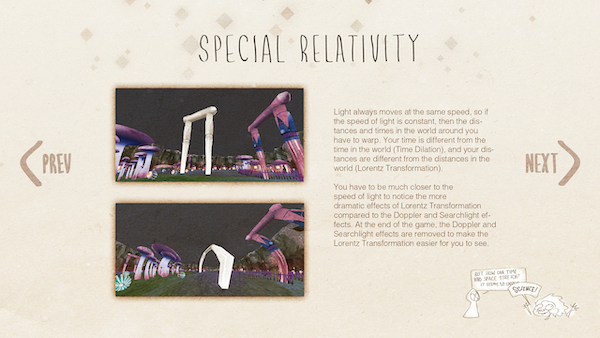
Image via MIT Game Lab
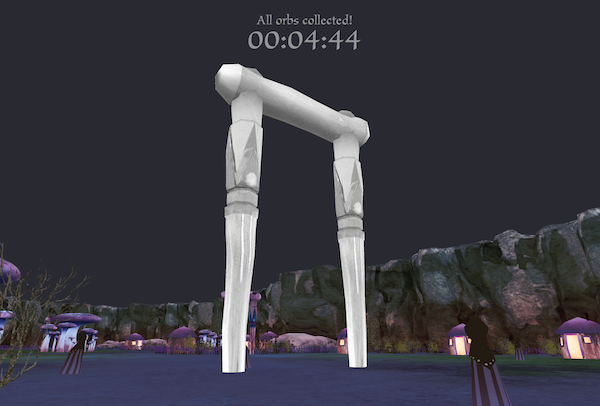
Image via MIT Game Lab
Image via MIT Game Lab

Image via MIT Game Lab
[via Live Science, all images via MIT Game Lab]
Also check out these recent news


