
Rembrandt Might’ve Been Behind A Mysterious Painting From 1979 Art Heist
Screenshot via Stiftung Schloss Friedenstein Gotha
Last year, five pieces of art were returned to the Baroque palace Schloss Friedenstein in Gotha, Germany. These Old Master works were stolen in a large art heist in communist East Germany in December 1979.
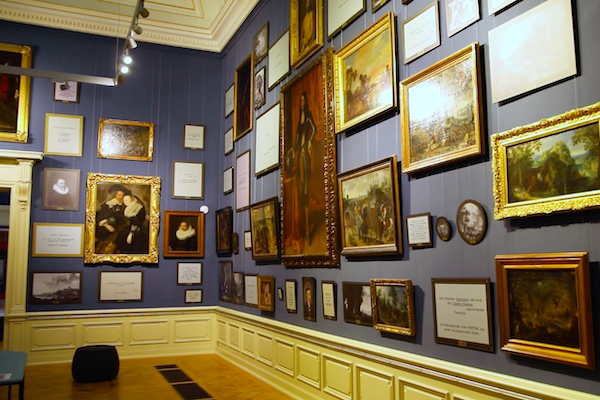
To mark their triumphant return and restoration, an exhibition called Back in Gotha! The Lost Masterpieces is currently running at Schloss Friedenstein through August 2022.
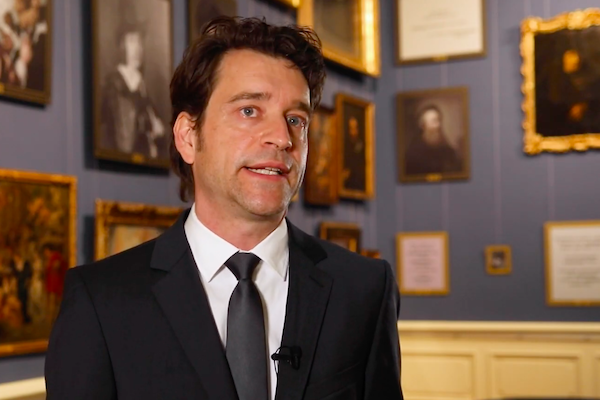
Of the five, the most damaged one was a Dutch depiction of an elderly bearded man, dating from between 1629 and 1632. This had been attributed to Jan Lievens and Ferdinand Bol, a pupil of Rembrandt over the last few years. However, the curator of the exhibition, Timo Trümper, says that analysis of the style of painting indicates that neither artist was behind the work.
He speculates that it is, in fact, an unknown Rembrandt piece.
Bol’s signature is on the back of the painting, but this could mean that he simply owned it and might not imply he was the painter. Instead, Trümper suggests that Bol took ownership of the painting after Rembrandt himself went bankrupt in 1656.
There is a work at the Harvard Art Museums in the US that bears a striking similarity to this painting, and that one has Rembrandt’s signature. Its attribution, though, has also been debatable. Referring to this other piece, Trümper says that under-painting on the Gotha work might indicate it being the original, with the Harvard painting being a later studio copy.
“It’s a question of interpretation,” Trümper tells The Art Newspaper. “We can be sure it originated in Rembrandt’s studio—the question is how much of it is Rembrandt and how much his pupils?”
“We have already talked to a lot of colleagues. Half say: ‘No, it’s not Rembrandt, it’s one of his pupils.’ The other half say it’s an interesting theory and they can’t rule it out.”
Screenshot via Stiftung Schloss Friedenstein Gotha
The four other works that were recovered include a Hans Holbein the Elder portrait of St. Catherine (1510); a Frans Hals portrait of an unknown gentleman donning a black hat and white collar (1535); a Jan Brueghel the Elder depiction of a country road with wagons and cows; and a copy of an Anthony van Dyck self-portrait with a sunflower produced by one of his contemporaries.
[via The Art Newspaper, all screenshots via Stiftung Schloss Friedenstein Gotha]
Also check out these recent news


