
Over 70 Million Americans Are Living In Places With Toxic Air Pollution: Report
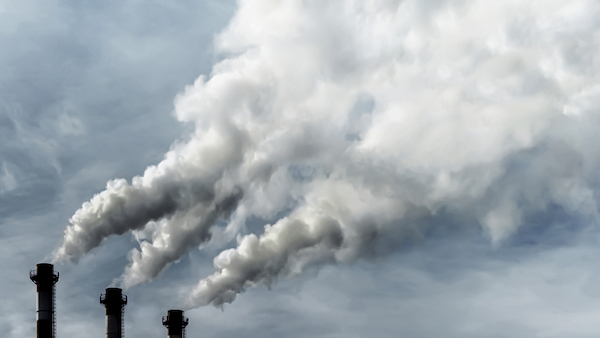
Image ID 162269031 © via OlgaKorica | Dreamstime.com
While America may be known for its sprawling national parks, many of its citizens are living in hazardous “sacrifice zones,” where air pollution levels pose a serious cancer risk to residents.
According to a recent report by ProPublica, almost 250,000 Americans are living in areas where the pollution from factories has hit levels considered “unacceptable” by the federal government.
Furthermore, despite the EPA saying that it “strives to protect the greatest number of people” from risk levels above 1 in 1,000,000, ProPublica’s analysis revealed that up to 74 million Americans—making up more than a fifth of the total population—reside in areas exposed to pollution above those risks.
For example, an 85-mile stretch of the Mississippi River, in Louisiana, is so saturated with oil and chemical plants that it’s been dubbed “Cancer Alley.”
Researchers have released a detailed map of carcinogenic industrial air pollution through the country, using “advance data processing software and a modelling tool” designed by the Environmental Protection Agency.
It lists over 1,000 “toxic hot spots,” which exceed the threshold of a 1 in 10,000 risk of developing cancer over a lifetime of exposure to pollutants.
Gut-wrenchingly, according to Input, areas where people of color make up the majority population are 40% more likely to suffer from polluted air, as compared to majority-White regions. In fact, ProPublica’s data showed that predominantly Black tracts showed a cancer risk more than double that of White tracts.
The report cites a quarter of the top 20 hot spots as being in Texas, which is worrying though unsurprising, due to most Southern states having lax environmental regulations. Residents throughout the nation can check the levels of pollution in their immediate area via the map, though the results may not be welcomed.
Unfortunately, though the Biden Administration has begun setting policies in place to undo the damage, solving these “toxic hot spots” will require “working back through 50 years of environmental regulations,” as per the Director of EPA’s Office of Environmental Justice, Matthew Tejada.
Learn more about the unsettling findings here.
[via Input and ProPublica, cover image OlgaKorica | Dreamstime.com]
Also check out these recent news


