
A Museum Is Opening At The North Korean Border, & You’ll Need A Military Escort
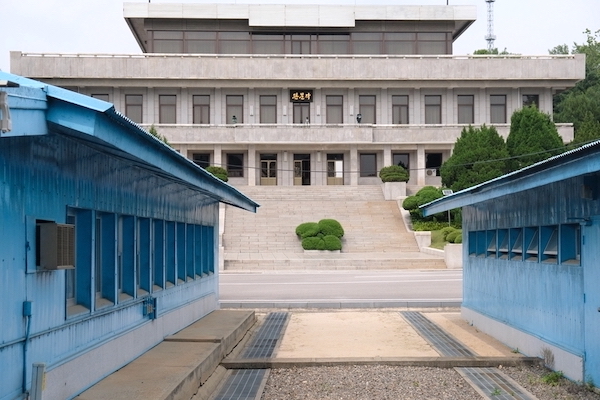
Image ID 119901085 © via David Watts Jr. | Dreamstime.com
A new museum is popping up at one of the unlikeliest places in the world: the Korean Demilitarized Zone (DMZ), a strip dividing North and South Korea at the peninsula’s 38th parallel.
Notably, visitors won’t be able to just waltz into its exhibitions—they’ll first require a military escort to view the artworks.
Named the Unimaru, meaning “a space of peace”, the new facility will soon host its inaugural exhibition, 2021 DMZ Art and Peace Platform, which will feature pieces by 32 artists, including names such as Nam June Paik, Olafur Eliasson, and Francis Alÿs.
The location was previously used as a temporary inter-Korean customs office when it was built in 2003, but had been left vacant since 2007.
Hyunjun Mihn, the architect behind the Museum of Modern Contemporary Art in Seoul, was tasked with transforming the space into one fit for a museum displaying contemporary works.
Unfortunately, according to Artnet News, North Korean artists weren’t able to participate in the first exhibition. Instead, Yeon Shim Chung, the museum’s artistic director, has set up an empty frame as part of the collection—depicting the space the participating artists have left for their North Korean counterparts.
Aside from the main museum itself, the exhibition will go on display at two DMZ train stations that are currently not in use, as well as a former guard post just a mile from the border.
At Dorasan Station, there will be a permanent fixture of six video screens installed, which will present works by Yiyun Kang, Min Jeong Geum, and Ye Seung Lee.
While at Jejin Station, visitors will be able to admire a scale model of the entire DMZ layout, including live pine trees, as well as recordings of nature sounds from the surrounding area.
South Korean artist Haegue Yang’s sculpture, Migratory DMZ Birds on Asymmetric Lens — Kyott Kyott Vessel (Pale Thrush), will be on display at the former guard post, which has been unused since both countries signed an agreement in 2018 to dismantle posts and remove land mines in the DMZ.
“When we go to this spot, we have to wear bulletproof vests, because it’s so close to North Korea. Soldiers accompany you carrying the Korean flag and the UN flag,” Chung explained.
A bird depicted in the sculpture, the pale thrush, is actually an endangered species that’s native to the DMZ. This serves as a visceral reminder of how both nations are interconnected by nature and wildlife.
“Nature does not distinguish North Korean and South Korean division,” as Chung put it poetically.
To check out the exhibition online, head here.
[via Artnet News, cover image via David Watts Jr. | Dreamstime.com]
Also check out these recent news


