
London’s River Thames, Once ‘Biologically Dead,’ Shows Signs Of Revival
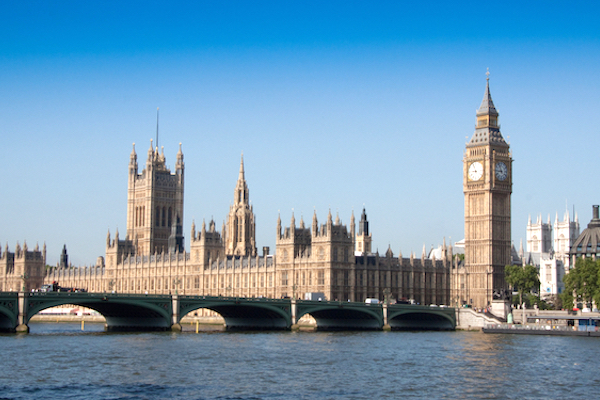
Image ID 20881972 © via Atakhar | Dreamstime.com
Over half a century ago, in 1957, scientists at the Natural History Museum of London declared that most of the 215-mile-long River Thames was “biologically dead” due to decades of pollution.
However, in a recent State of the Thames report, researchers found that the river was once again teeming with life and is “home to myriad wildlife as diverse as London itself.”
“This report has enabled us to really look at how far the Thames has come on its journey to recovery since it was declared biologically dead, and in some cases, set baselines to build from in the future,” said Alison Debney, a leader of the Zoological Society of London’s conversation program, as reported by The Smithsonian Magazine.
Among the species that have made a return are the harbor seal and grey seal, which can now be spotted in the river. The avocet, a migratory bird that had once been extinct but resurfaced after World War II, has seen its numbers more than double near the Thames.
Naturally, while the report offers an optimistic view of the Thames’ revival, climate change is still a key concern which could disrupt wildlife populations within the river’s confines. The current situation appears to bode well for birds and marine mammals, though fish might not be as well off.
According to NPR, researchers are still unsure if the changes are due to different methods of sampling, or that the numbers are “an indication of pressures on fish populations either in the Tidal Thames, or further afield.”
“In addition, the influences of climate change are clearly impacting the Tidal Thames, as both water temperature and sea levels continue to rise above historic baselines. This will undoubtedly affect the estuary’s wildlife, leading to changes in life-history patterns and species ranges,” the report noted.
Fortunately, a “super sewer” project is underway, with the Thames Tideway Tunnel expected to be completed in 2025. This tunnel will help “capture and store most of the millions of tonnes of raw sewage that currently overflow into the estuary,” allowing the quality of the water in the river to improve over time.
The new sewer will “have a significant impact on the water quality, making it a much healthier environment for wildlife to survive and flourish,” said Liz Wood-Griffiths, a leader for the project.
For now, the Zoological Society of London will team up with conversationists to repopulate parts of the Thames with native seagrasses and shellfish, such as oysters.
“Between them, these not only help to restore wildlife in the river, but also act as natural flood defenses, and help to mitigate against extreme weather such as storms and floods,” explained Debney.
“A resilient future for both people and wildlife will depend on protecting remaining natural habitats, reconnecting and restoring habitats, and innovating new ways to maximize opportunities for wildlife in the urban environment.”
[via The Smithsonian Magazine and NPR, cover image via Atakhar | Dreamstime.com]
Also check out these recent news


