
Controversial Thomas Jefferson Statue Will Move From New York City Hall
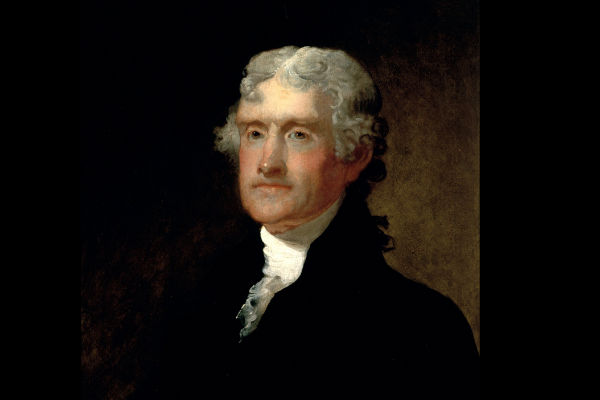
Image via Matthew Harris Jouett / Wikimedia Commons (Public Domain)
A statue of Thomas Jefferson from the 19th century, which has spent over a century overlooking the New York City Council, was authorized to be removed from its premises last month.
The decision was made following a unanimous vote by the Council members, in which the Black, Latino, and Asian Caucus pushed for the statue’s removal, while others felt doing so would mar Jefferson’s historical significance as the main architect of the Declaration of Independence.
Now, it has been decided that the seven-foot statue will find its new home at the New-York Historical Society and will be on display at its lobby gallery for six months, before being relocated to the reading room. Currently, the museum has signed a 10-year loan agreement with the Council, which will allow the statue to remain accessible to the public.
According to The New York Times, the statue was commissioned in 1833 by the first Jewish commodore in the US Navy, Uriah P Levy, to honor Jefferson’s fight for religious freedom in the military. It was sculpted by famed French artist Pierre-Jean David d’Angers and modeled after another statue of the founding father on display at the US Capitol Rotunda in Washington.
I am glad they resolved this by sending it to @NYHistory. We’ll have a great exhibit. I look forward to helping in any way I can.
— Annette Gordon-Reed (@agordonreed) November 15, 2021
Thomas Jefferson Statue Evicted From City Hall Will Go to a Museum - The New York Times https://t.co/fKGNYLtuLE
Louise Mirrer, New-York Historical Society President, said that the statue’s “move-in” date, which is scheduled for April 2022, will coincide with an exhibition on the “principal contradiction of [the nation’s] founding ideals.”
“From the start, we have seen the opportunity to display the statue as consistent with the ways in which we look at history at our institution. Jefferson just has to be one of those figures that really draws attention to the distance between our founding ideals, and the reality of our nation,” Mirrer explained.
Others, including Michele H Bogart, Professor Emeritus of Art History and Visual Culture at Stony Brook University, have taken issue with the statue’s removal. Bogart said doing so only “deflects attention” from “bad men” who are celebrated figures of the nation, and was one of 17 historians who suggested relocating the sculpture to the Governor’s Room within the City Hall building.
“I have a philosophical problem with removing it from City Hall. If you can remove the Thomas Jefferson statue, then you can remove works from other city buildings,” she said.
However, Keri Butler, the Executive Director of the Design Commission rejected the historians’ proposal, citing that it wasn’t possible to properly contextualize the messy history of the statue in the Governor’s Room, and that it would be inaccessible to the public as the building isn’t open in the evenings or on the weekends.
Some have more extreme views, such as advocating for the statue to be eradicated completely. Assemblyman Charles Barron, a former councilman, said that the commemorative sculpture “should be destroyed.” He had been trying to get the statue removed all the way back in 2001.
“A statue should be for those who we honor for their exemplary service and duty to all of this country, not just the white race,” he explained.
While the statue will move out of its century-old home next year, it seems the underlying issue of problematic historical landmarks will continue to be debated in the public sphere for a long time to come.
[via The New York Times, cover image via Matthew Harris Jouett / Wikimedia Commons (Public Domain)]
Also check out these recent news


