
McDonald’s Opens Net-Zero Restaurant With Reclaimed Tires, Sheep’s Wool Walls
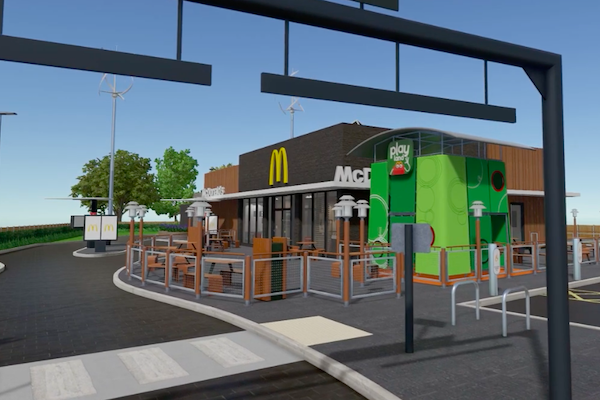
Image via McDonald’s
As a name with significant global presence and significance, McDonald’s has made its stance on developing climate-friendly business practices clear over the last year, introducing a variety of sustainable plans from changing up Happy Meal toys to introducing vegan options.
In a bid to make the operations of its restaurants greener, too, the fast-food giant has just introduced what it calls the UK’s first net-zero carbon restaurant. This means that it won’t be adding to the amount of greenhouse gases already existing in our atmosphere.
Located in Market Drayton, Shropshire, the new restaurant was designed for net-zero emissions in terms of both construction and everyday operation. It was verified through the UK Green Building Council’s net-zero carbon buildings framework, per the BBC.
According to the company, it’ll act as a “blueprint” for future restaurants in the UK, as well as a “testing site” for the new innovations put in place by the company.
Some of these new innovations include a drive-thru lane made of recycled tires, wall insulation made with British sheep’s wool, signs crafted from coffee beans, and building cladding made from recycled IT equipment and other white household goods, such as washing machines.
There is also a biodiversity garden and nature trail included onsite, which was designed by children from a local junior school. It’ll collect rainwater and serve as a habitat for frogs and other wildlife.
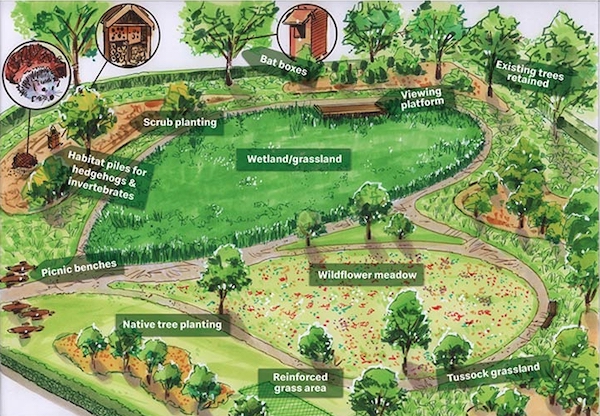
Image via McDonald’s
Additionally, and perhaps most impressively, the restaurant is powered by two wind turbines and 92 square meters of solar panels. This will produce up to 60,000 kWh of power annually, which greatly reduces the pressure otherwise put on the grid, and will also allow the restaurant to generate enough power to be able to give back to it.
“At McDonald’s we believe that our food needs to be served in restaurants that are sustainable for the future,” states Beth Hart, VP of Supply Chain and Brand Trust.
“Market Drayton is a big step towards making that a reality, enabling us to test and put into practice what a net-zero emissions building, both in build and use, really looks like.”
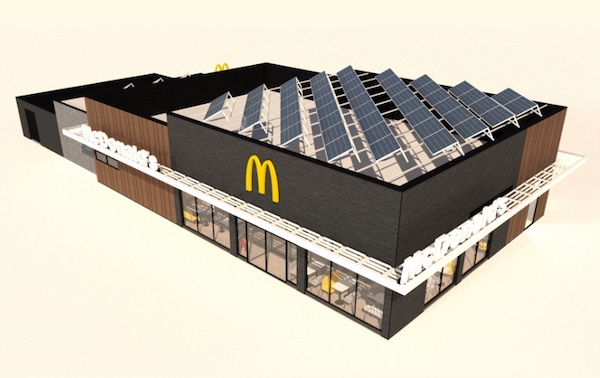
Image via McDonald’s
McDonald’s has also stated that its aim is to achieve net-zero emissions for its offices and all 1,400 of its restaurants by the end of the decade.
[via the BBC, images via McDonald’s]
Also check out these recent news


