
Microsoft Resurrects Ancient Olympia & All Its Historical Wonders To Be Explored
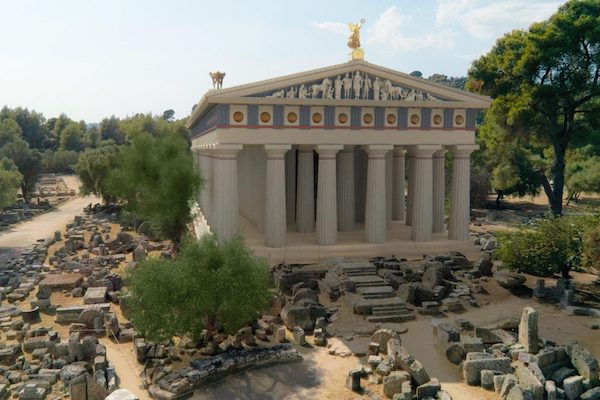
Image via A_DA
Ancient Olympia, Greece, is widely known as the birthplace of the Olympics. Dedicated to the worship of Zeus, the site still has 27 major monuments and countless other minor ones, which many visitors travel specially to see.
Among these are the original Olympic Stadium, and the temples of Zeus and Hera. These monuments have weathered millennia of weather, war, and modernization, thanks to preservation efforts by the Hellenic Ministry of Culture and Sports. But unfortunately, not everything has survived.
Like the Statue of Zeus, which once towered at a whopping 41 feet after completion by the renowned Greek sculptor Phidias. Today, only artistic impressions remain.
Taking conservation another step further is a collaboration between the federal body, experience innovation and design agency A_DA, and Microsoft in order to digitally preserve these pieces of culture and history.
Common Grounds, as the “digital revival project” is called, will include monuments still standing and those vanished alike, utilizing revolutionary technology to recreate the site as it would’ve once looked like in its heyday, and at various points along the timeline as the site underwent its changes.
This will “ensure that all the evidence of the rich history and civil common ground values that the site was built upon is handed over to future generations,” Microsoft writes.
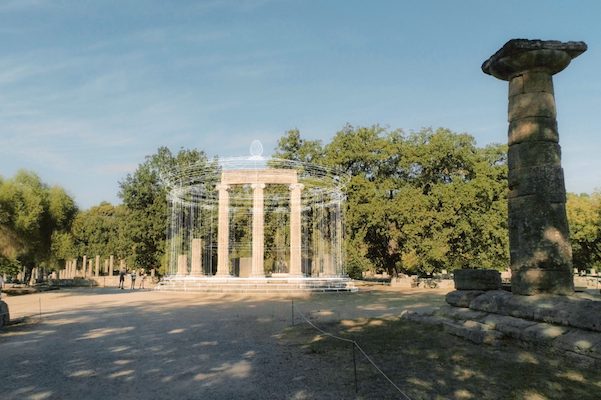
Image via A_DA
Thus, the ambitious Ancient Olympia: Common Grounds was born: a multi-sensory, immersive experience recreating the glory of Ancient Olympia. Visitors and audiences are thrust into the site, being able to explore it as they would’ve if they had been wondering those grounds more than 2,000 years ago.
Artificial Intelligence, augmented reality, and Extended Reality (XR) are the main players in this project, revealed this month.
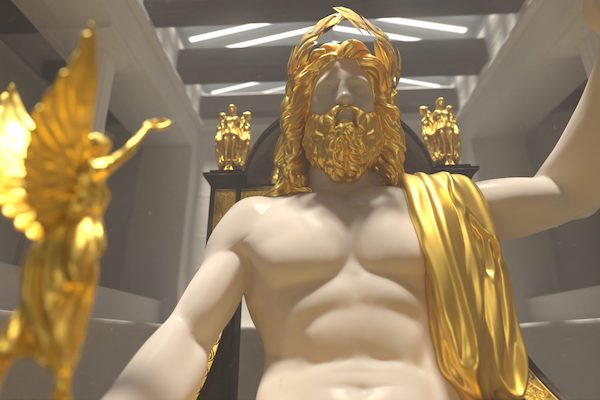
Image via A_DA
To replicate the site in as accurate detail as possible, “hundreds of thousands” of images taken at the location by on-the-ground cameras and drones were turned into a foundational model, which became the base for the project. Microsoft’s AI processed this to create photorealistic 3D renditions of its features, a process that took around 18 months.
Ensuring the historical accuracy was the Hellenic Ministry’s archaeological team, who worked closely alongside the project.
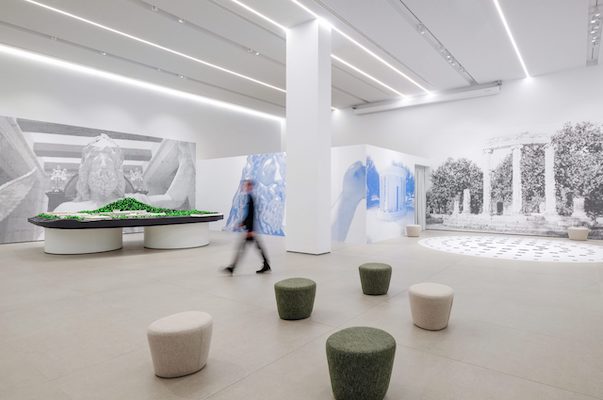
Image via A_DA
A physical exhibit can be visited at the Athens Olympic Museum, which allows users to explore an immersive tour through Microsoft’s HoloLens 2. But if you’re not in Athens, no fret—an AR app for both iOS and Android and web platform are also available for exploration.
[via A_DA]
Also check out these recent news


