
UNESCO Inscribes Arabic Calligraphy As ‘Intangible Culture Heritage Of Humanity’
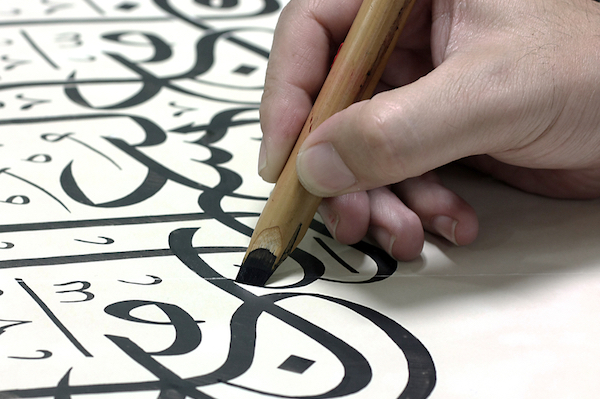
Image ID 16269848 © via Mozaiic | Dreamstime.com
Recently, UNESCO officially added Arabic calligraphy to its ‘Intangible Cultural Heritage of Humanity’ list, following an application put forth by a coalition of 16 Arabic-speaking countries, such as Palestine, Egypt, and Jordan.
Saudi Arabia led the charge, having marked 2020 and 2021 as the “Years of Arabic Calligraphy.” Prince Badr bin Abdullah bin Farhan, the nation’s Minister of Culture, said he welcomed “the inscription of Arabic calligraphy, which is the result of the Kingdom championing this treasured aspect of authentic Arabic culture.”
On its website, UNESCO described the craft as “the artistic practice of handwriting Arabic script in a fluid manner to convey harmony, grace, and beauty.”
The art form makes use of the 28 letters of the Arabic alphabet, which is typically written in cursive and read from left to right. It is practiced by both women and men of all ages, and is sometimes formally taught in schools or passed down through apprenticeships.
Traditionally, natural materials such as bamboo stems and reeds are used for the writing instrument, known as the qalam. The ink is composed of honey, black soot and saffron, while the paper is treated with egg white and starch.
According to ARTnews, the calligraphy was initially invented to make Arabic more legible, though it eventually morphed into more fanciful styles. Due to the nature of the script in itself, artists have countless ways of turning writing into creative motifs.
The craft has also evolved with time, and modern tools such as markers and spray paints are commonly used for trendy creations such as calligraffiti.
While UNESCO typically recognizes heritage sites, the intangible cultural heritage list are for practices such as art forms, games, dialects or culinary expertise which don’t have a fixed physical form. In addition to calligraphy, the 16-nation coalition successfully got falconry added to the list as well.
[via UNESCO and ARTnews, cover image via Mozaiic | Dreamstime.com]
Also check out these recent news


