
Scientists Invent Smart Bandage That Checks Chronic Wounds In Real-Time
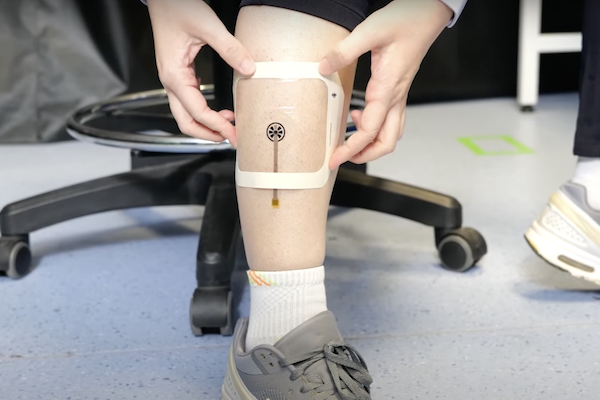
Video screenshot via National University of Singapore
Researchers have come up with a new wearable sensor that’s able to check chronic wounds in real-time via an app. In just 15 minutes, the smart sensor can diagnose the temperature, pH, bacteria type, and inflammatory properties specific to the type of injury suffered.
The team at the National University of Singapore (NUS), who published their findings in the Science Advances, explained that due to the country’s aging population, more citizens are suffering from non-healing wounds such as diabetic foot and chronic venous leg ulcers. According to Futurity, about 2% of the worldwide population faces the same problem.
Chronic wounds, especially diabetic foot ulcers, are difficult to care for, and patients run the risk of foot amputation if the area gets infected. However, making frequent trips to the doctor’s for lengthy assessments is often time-consuming and expensive.
VeCare, a point-of-care wound assessment platform, is the team’s solution to the mounting problem, and comprises a smart sensor, an electronic chip, and a mobile app working together.

Image via National University of Singapore
The bandage—which consists of a wound contact layer, breathable outer barrier, microfluidic wound fluid collector, and flexible immunosensor—is able to detect specific biomarkers from different types of wounds, allowing for reliable results regardless of the wound’s placement or size.
An electronic chip connected to the sensor then wirelessly transmits data to the app for real-time analysis online, and is powered by a rechargeable battery so it can be reused for future tests. The platform and mobile app help to connect doctors with patients remotely, eliminating the need for long trips to the clinic.
“Point-of-care devices coupled with telehealth or digital health capability can play a significant role in transforming the healthcare industry and our society, which is catalyzed by the COVID-19 pandemic requirements for safe distancing,” said Lim Chwee Teck from the biomedical engineering department at NUS.
“Our smart bandage technology is the first of its kind designed for chronic wound management to give patients the freedom to perform the test and monitor their wound conditions at home,” he said.
Going forward, the team hopes to develop VeCare further so that it meets regulatory and mass-production standards. The researchers hope to be able to test the technology on a larger sample size in a randomized trial to gain insight into how the sensor works with different types of chronic ulcers.
[via Futurity, images via various sources]
Also check out these recent news


