
Scientists Unearth Embryo In Fossilized Dinosaur Egg, Linked To Modern Birds
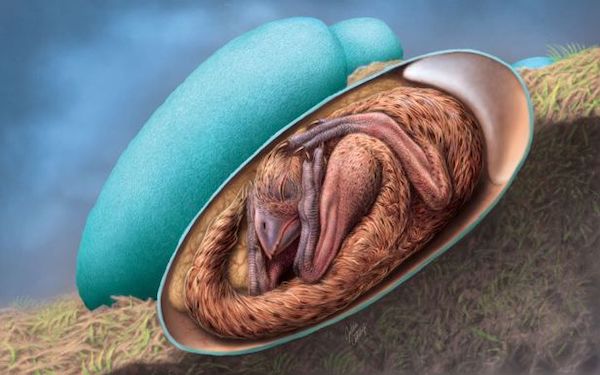
A fossilized dinosaur egg dating back 66 million years, which was unearthed by a Chinese mining company in 2000, has just been found to contain a fully-intact embryo inside of it. Researchers believe the stunning discovery could allow them to learn more about how ancient species evolved into modern-day birds.
The relic had first been uncovered in Ganzhou, Jiangxi Province, by the Yingliang Group while its workers were mining stones. Suspecting they could’ve chanced upon dinosaur fossils, they placed the egg in storage. However, it wasn’t till the company embarked on building the Yingliang Stone Nature History Museum in 2010 that scientists found the embryo.
Museum staff were going through the fossils in storage, when they noticed bones within the egg. After taking a closer look at the fossils, it was found that the egg had in fact contained a dinosaur embryo, which was nicknamed ‘Baby Yingliang’. It is estimated to be between 66- and 72-million-years-old.
“Dinosaur embryos are some of the rarest fossils, and most of them are incomplete with the bones dislocated,” said Fion Waisum Ma, a researcher at the University of Birmingham who was part of the study.
“We are very excited about the discovery of ‘Baby Yingliang’. It is preserved in a great condition and helps us answer a lot of questions about dinosaur growth and reproduction,” he said.
According to USA Today, this particular egg came from a dinosaur known as the oviraptorosaurs, which is closely linked to the birds we see today. It belonged to the therapy group, which comprised carnivorous dinosaurs with small forelimbs that moved on two feet, such as the Tyrannosaurus rex.
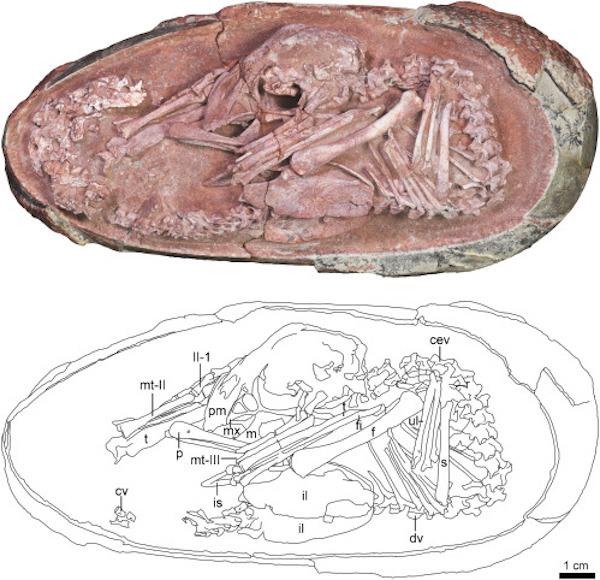
Scientists examining the embryo learned that it was posed in a similar way to birds before they hatch, which had originally been thought to be unique to our flying friends. ‘Baby Yingliang’ was found in a tucking position, with its feet on the side of its head and its back resting against the egg’s shell.
From what we know, the oviraptorosaurs didn’t fly, which makes this tucking position all the more intriguing. This is the first time an embryo of a non-avian animal has been found in that manner, which possibly suggests that modern birds’ eggs could be influenced by non-flying dinosaurs millennia ago.
“It is interesting to see this dinosaur embryo and a chicken embryo pose in a similar way inside the egg, which possibly indicates similar preaching behaviors. This posture had not been recognized in non-avian dinosaurs before,” explained Waisum Ma.
“This dinosaur embryo inside its egg is one of the most beautiful fossils I have ever seen,” said Steve Brusatte, a paleontologist from the University of Edinburgh.
“This little prenatal dinosaur looks just like a baby bird curled in its egg, which is yet more evidence that many features characteristics of today’s birds first evolved in their dinosaur ancestors,” he remarked.
[via USA Today, images via various sources]


