
Closest Thing We Have To A Hoverboard Is Only Possible On The Moon, For Now
Hoverboards might not yet be a common form of transport gracing our city streets, but scientists are certainly not giving up on the prospect just yet.
As it turns out, hoverboards and other floating transport systems might’ve been old news, and everything would be much easier, if humans would have just lived on the Moon. Duh.
A team of MIT researchers are taking advantage of the fact that the Moon and other airless environments, unlike our Earth, don’t have an atmosphere. This means that an electric field can be built up via exposure to the sun and surrounding plasma.
In context of the Moon, this then means that the surface charge is strong enough to levitate dust more than a meter (3.3 feet) above ground.
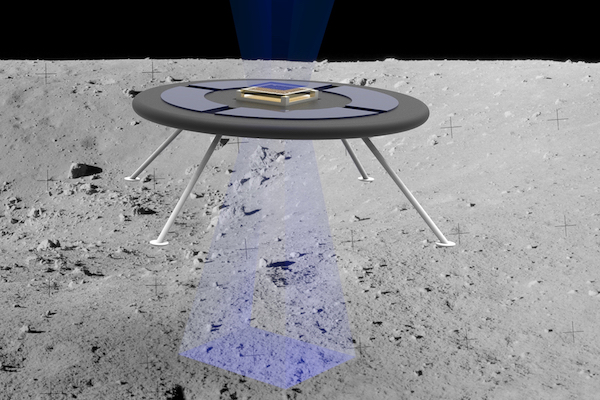
This saucer-shaped concept designed by the team is said to use “tiny ion beams” to charge the vehicle while simultaneously enhancing the surface’s natural charge. This creates a “relatively large repulsive force” between the vehicle and surface, without requiring a ton of power, and keeps it “floating” in the air.
In a news release by MIT, it was stated that an initial study showed that the ion boost would be enough to lift a small vehicle, weighing around two pounds, on the Moon or a large asteroid.
According to Paulo Lozano, study co-author, this ionic design “uses very little power to generate a lot of voltage.” The amount of power required is “so small, you could do this almost for free.”
So, the question is, “why?” Apart from being pretty fun to envision, the most suitable use for this tech right now would be space exploration, especially in areas where conditions are still largely unknown.
When implemented in a rover, the ion thrusters can send vehicles hovering above unknown territory while ensuring their safety.
“With a levitating rover, you don’t have to worry about wheels or moving parts,” Lozano explains further. “As long as you had a controlled mechanism to keep your rover floating, then you could go over very rough, unexplored terrain, without having to dodge the asteroid physically.”
The team’s research is further detailed in a paper that was published in the Journal of Spacecraft and Rockets earlier this year.


