
Woolly Mammoths Could’ve Co-Existed With Humans Only 5,000 Years Ago
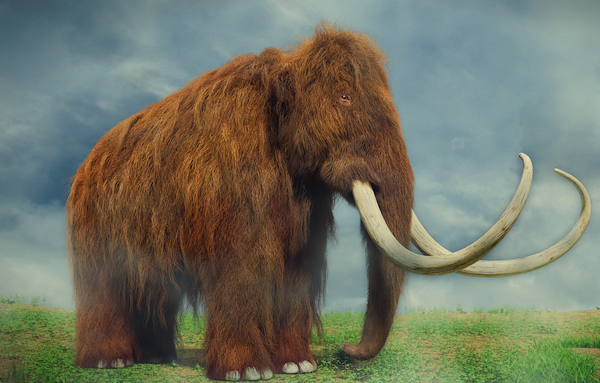
Researchers have chanced upon new evidence that suggest woolly mammoths could’ve roamed across North America thousands of years longer than previously thought.
The new findings come as scientists tested leftover mammoth DNA found in vials of frozen Alaskan permafrost, which had been forgotten in a laboratory freezer for over a decade. Results show that the large beasts might have still existed in the Yukon, part of Canada, up till 5,000 years ago.
The mammoths, much like humans, shed loads of skin cells (containing DNA) daily. While most DNA bits are consumed by microbes or lost to the natural surroundings, some attach to a small chunk of mineral sediment, allowing them to be preserved for scientists to analyze their properties today.
“In a tiny fleck of dirt, is DNA from full ecosystems,” Tyler Murchie, a postdoctoral researcher in the Department of Anthropology at McMaster University, told Live Science.
When Murchie analyzed soil samples taken from central Yukon, he found that he was able to indirectly observe the evolution of ancient ecosystems during the Pleistocene-Holocene transition, which took place 14,000 to 11,000 years ago. The findings were published in the Nature journal.
These samples revealed that mammoths likely survived in the Arctic for a much longer period than we once realized. Though they were in steep decline during the transition, the data gave insight that not all of them disappeared at once due to a climate catastrophe or were hunted to extinction.
Most large extinction events have been blamed on hunters from the era or a sudden climate change, said the study’s lead author, Hendrik Poinar, an evolutionary geneticist and director of the McMaster Ancient DNA Centre.
However, findings from the new study do seem to change “the focus away from this two-pitted debate that has plagued [paleontology] for so long,” said Poinar.
While there is evidence that they were being hunted rapidly by ancient peoples, and that climate change played a part in their decline, the question now is “how much were they hunted and whether or not that was truly the tipping point.”
Scientists planning to look further into ancient mysteries, including the extinction of mammoths, have a race against time as ice in the Arctic continues to melt due to increases in temperature.
“We’re going to lose a lot of that life history data. It’s just going to fall away before anyone gets a chance to study it,” lamented Murchie.
[via Live Science, cover image via Planetfelicity | Dreamstime.com]


