
It’s Now Possible To 3D-Print A Customized Ear, Thanks To ‘Scaffolding’ Tech
It’s not entirely impossible to build an ear, but it often comes with a lot of discomfort.
Patients with microtia, a condition at birth, suffer impaired hearing or loss of hearing entirely due to the way the external ear has failed to form properly.
Microtia reconstruction involves creating an ear using cartilage “borrowed” from the chest area, which is not only painful but also carries risk of further complications. Plus, there’s no guarantee that the new ear will match the existing one.
So why put people through all of this when you could just, well, print one?

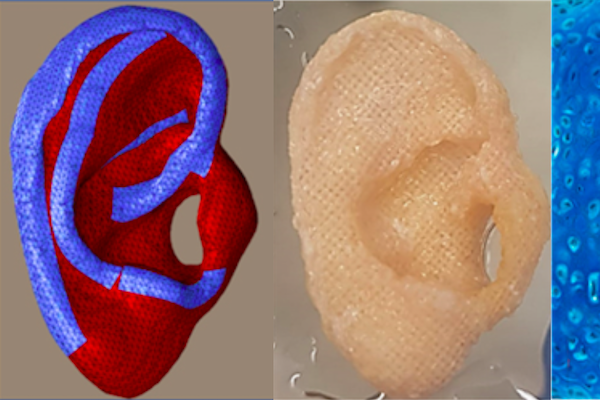
Researchers from the Technion-Israel Institute of Technology and Sheba Medical Center have devised a way to 3D-print the “scaffolding” of a replacement ear, which allows for the development of an auricle—the visible part of the ear.
It forms chondrocytes, which are cells involved in cartilage formation. With variously-sized pores, the scaffold allows cells to attach onto it and encourage growth. Based on a CT scan individualized to the patient, this scaffold can be initiated for patients as young as just six years old.
According to the researchers’ paper published in the journal Biofabrication, the team monitored the procedure and cartilage formation for a period between 10 days and six weeks before implanting it onto a rodent test subject.
This new ear “demonstrated good biomechanical function,” the press release writes.
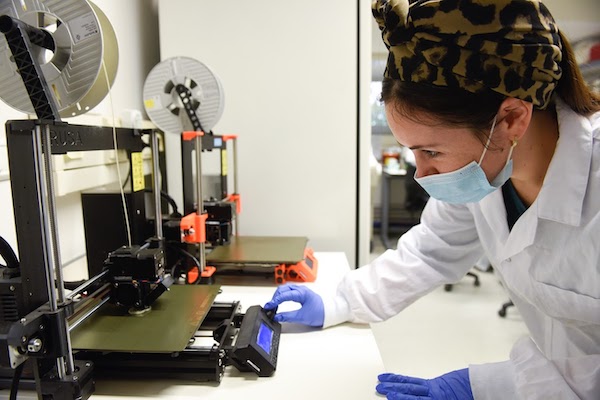
“Fabricating an ear necessitates the use of biodegradable materials that break down in the body without harming it but have an extremely accurate external structure and small pores,” explains Professor Shulamit Levenberg, study co-author, stating that finding a suitable 3D-printing method was a challenge.
“We … estimate that it will be possible to tailor our technology to other applications, such as nasal reconstruction and fabrication of various orthopedic implants.”
[via ISRAEL21c, images via the Technion Spokesperson’s Office]


