
New COVID-19 Vaccine Is Made Patent-Free As A ‘Gift To The World’
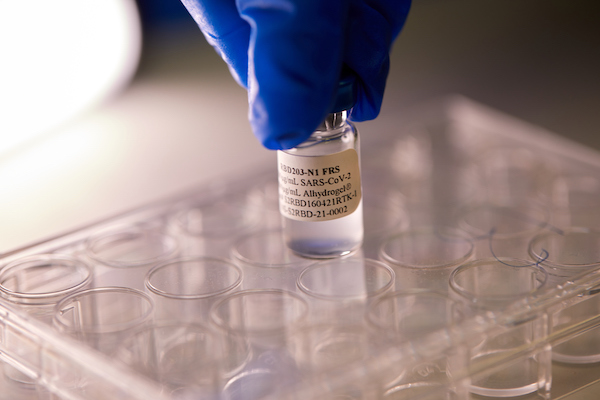
Researchers at the Texas Children’s Hospital and Baylor College of Medicine have developed a new COVID-19 vaccine that will be offered patent-free to manufacturers worldwide.
The Corbevax has undergone human trials that proved the vaccine to be safe and effective, and over 100 million doses are being produced for India, as authorities have authorized its use in the country.
Peter Hotez, one of the project’s scientists, said that the vaccine is a “gift to the world.” The patent-free formula can be manufactured by companies across the world, especially those in low-income countries, at a low cost. In fact, the team has sent the technology to vaccine makers in India, Indonesia, Bangladesh, and Botswana.
“We’re not trying to make money. We just want to see people get vaccinated,” Hotez told The Washington Post.
According to New Atlas, the vaccine works similarly to others already in circulation, focusing on coronavirus spike proteins to trigger an immune response. However, instead of relying on mRNA technology to direct cells into producing the spike proteins, this vaccine delivers lab-grown spike proteins into the body directly.
Scientists were able to engineer yeast to produce the key gene for the spike proteins, which are then collected, refined, and mixed with other substances to enhance immune responses. This method has been used in the past to create vaccines for Hepatitis B.
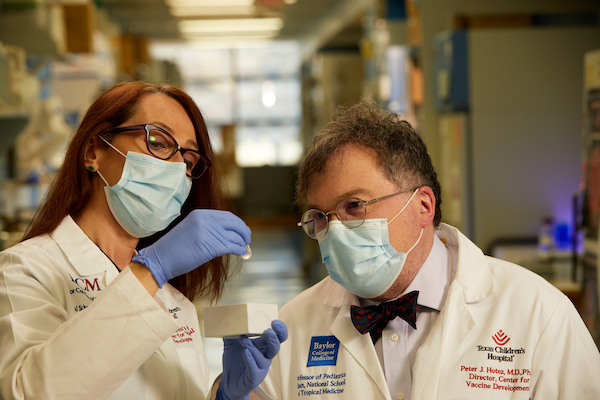
In 2020, the team in the US partnered with India-based pharmaceutical company Biological E to start its clinical trials and manufacture the vaccines. The findings showed that Corbevax was at least 80% effective at preventing symptoms from the Delta variant.
Going forward, the pharmaceutical firm plans to produce over one billion doses of the vaccine this year alone, which is expected to be as effective as most vaccines on the market against the current Omicron variant.
“This announcement is an important first step in vaccinating the world and halting the pandemic. Our vaccine technology offers a path to address an unfolding humanitarian crisis, namely the vulnerability the low- and middle-income countries face against the delta variant,” said Hotez.
[via New Atlas and The Washington Post, cover image via Texas Children’s Hospital]


