
New Blood Test Spots Cancer In Patients With Vague Symptoms For Early Diagnosis
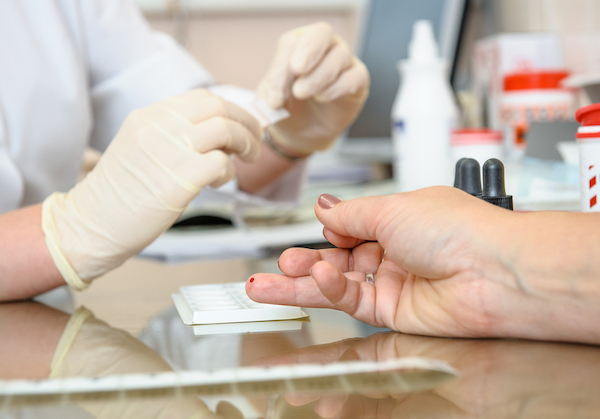
Researchers have recently developed a new blood test that could help diagnose cancer in patients with vague symptoms, such as sudden weight loss or extreme fatigue.
The test will be a way to spot a disease earlier, when patients are still able to respond to treatment, and can determine how far the cancer has spread. As per The Guardian, there is currently no clear way of diagnosing cancer in patients with non-specific symptoms.
In fact, if a patient visits a general practitioner who cannot identify an obvious cause or doesn’t suspect it could be cancer, they’ll be told to wait till their condition gets worse before seeking a second opinion. By then, the disease could be in its advanced stages.
“The problem we’ve had in the past is that if they do have cancer, that cancer is growing all the time, and when they come back the cancers are often quite advanced,” explained Dr James Larkin from the University of Oxford.
Here’s how it works: The new test uses a technology called nuclear magnetic resonance (NMR) spectroscopy that looks into levels of small molecules—called metabolities—in the bloodstream. A patient with cancer will show different metabolic “fingerprints” when compared to a healthy person, thus allowing doctors to immediately pinpoint the problem.
Dr Larkin and his colleagues, who published their findings in a journal, had analyzed 300 patients with non-specific symptoms of cancer. Amazingly, the blood test was able to correctly identify the disease in 19 out of 20 with those who were later determined to have it. It could even tell who had localized or metastatic cancer with 94% accuracy.
Going forward, the doctors hope the test can be further developed to be able to detect the exact type of tumor a patient has. For now, it’s supremely useful in identifying patients with early-stage cancers, who would have a better chance of fighting the disease should they receive treatment earlier.
“We are only really beginning to scratch the surface of what can be done with this technology and have high hopes for future discoveries as we explore what can be done,” said Larkin, as reported by Science Focus.
“The goal is to produce a test for cancer that any GP can request,” added Dr Fay Probert, another researcher on the study.
“We envisage that metabolomic analysis of the blood will allow accurate, timely and cost-effective triaging of patients with suspected cancer, and could allow better prioritisation of patients based on the additional early information this test provides on their disease.”
[via The Guardian and Science Focus, cover image via Amoklv | Dreamstime.com]


