
Fungus Is The Unlikely Star In These Sustainable, High-Protein ‘Egg Whites’
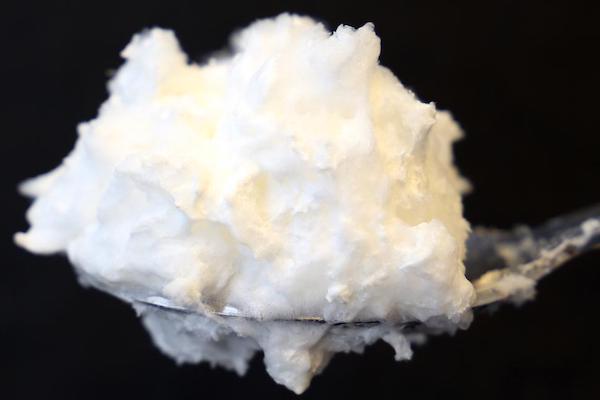
Image via the VTT Technical Research Centre of Finland
Egg whites are one of the food industry’s most celebrated sources of protein. This is thanks to ovalbumin, which makes up up to 58% of the egg white’s total protein content.
Scientists from the University of Helsinki and the VTT Technical Research Center of Finland have taken this component as a base for a more sustainable alternative produced with none other than fungus.
The study, published in the Nature Food journal, details how the researchers genetically modified the Trichoderma reesei fungus to enable it to secrete ovalbumin.
This was done by inserting the chicken gene that produces ovalbumin into the fungus. Its consequent protein secretions were then collected and made into a powder.
This powder, tested by the team, was reported to have many properties consistent with chicken-produced egg white powder, which is what makes it so popular in the first place.
One of these includes the ability to foam up, which is a crucial aspect in making things like meringues.
As demand for chicken egg white powder grows, it’s necessary to find a potential alternative as the practice of rearing chickens is expected to have a significant effect on the environment.
Vegconomist also reports that the team states this technology would also benefit the consumer as it eliminates the risk of salmonella and exposure to agricultural antibiotics.
According to Doctoral Researcher Natasha Järviö from the University of Helsinki, production of the fungus-based ovalbumin in comparison to the conventional chicken egg would help to reduce land use by up to 90%, while reducing greenhouse gas emissions by anywhere between 31% and 55%.
“In the future, when production is based on low carbon energy, precision fermentation has the potential to reduce the impact even by up to 72%,” Järviö shares in a statement.
[via The Optimist Daily and Vegconomist, image via the VTT Technical Research Centre of Finland]


