
Chinese Scientists Build AI ‘Nanny’ That Takes Care Of Babies In Artificial Womb
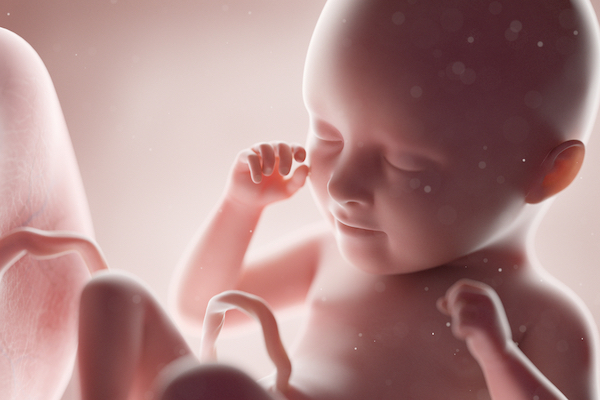
A new invention to remotely help childbirth along, alleviating mothers-to-be of the physical (and oftentimes dangerous) toll, is being tested in China. Scientists at the Suzhou Institute of Biomedical Engineering and Technology have created an artificial intelligence “nanny” that can watch over fetuses in an artificial womb and ensure they grow healthily in real-time.
The makeshift womb and system are being experimented with on mice babies, but there’s also the potential for them to work with human embryos in a lab. For context, human genes are extremely close to those of rodents, with a similarity of up to 99%.
The “nanny” is designed to observe progressions in embryo development, like changes in nutrients and carbon dioxide levels. It also has the ability to step in and regulate them to encourage growth, ZME Science details. If an embryo has a defect or dies, the robot could notify a technician.
The researchers documented the technology in the Journal of Biomedical Engineering scientific journal last month, and the findings were recently picked up by the South China Morning Post.
Currently, international law prohibits any testing on human embryos, so the equipment is merely a proof of concept for now.
Of course, the technology’s ethical implications would also need to be ironed out first. Plus, it’s still unclear if the system is able to fully grow a fetus.
Nevertheless, it offers hope to aspiring parents who may not be able to carry a baby themselves. There would be no need to go through a surrogate, and premature infants could be kept safe until they are ready.
The challenges of childbirth have long been documented. Most women who have given birth have sustained some form of injury or trauma, like fractures or muscle tears, with life-threatening repercussions including heart attacks and kidney failure. Post-labor, they may even notice drastic shifts in mental health.
The scientists claim that the new technology is much safer than naturally giving birth, since it passes all the physical and psychological burden over to a robot and an external “womb.”
[via Futurism, ZME Science, South China Morning Post, cover illustration 158794895 © Sebastian Kaulitzki | Dreamstime.com]


