
Quadcopter Drone Built On Da Vinci’s 500-Year-Old Concept Perfectly Takes Flight
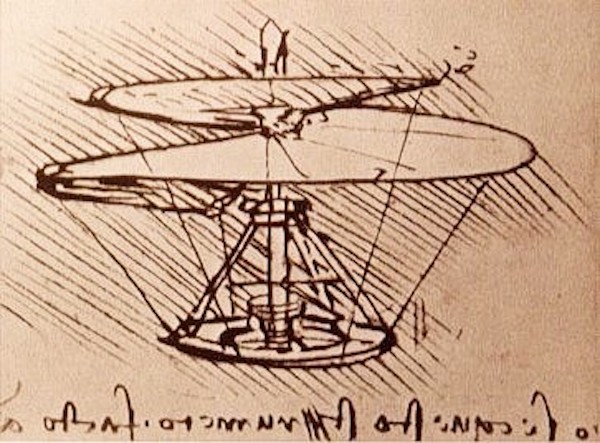
In the late 1480s, a proposal for a single-seater helicopter was drawn up by none other than Leonardo da Vinci. In all his genius, he suggested the use of an “aerial screw” to propel it along.
Unfortunately, he never got to test out his design to its full capacity. Whether it would’ve worked has always been an unanswered question—until now.
An engineering team from the University of Maryland first tried out a prototype using da Vinci’s design for a VTOL design contest.
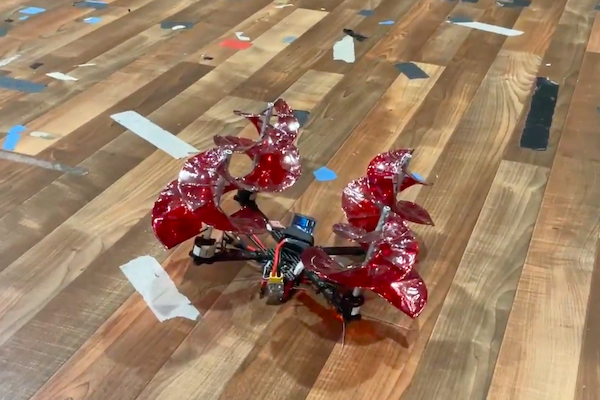
Then one team member created another unmanned drone for his master’s degree, which has been christened ‘Crimson Spin’. Although the group was initially skeptical of the centuries-old design, computer simulations and 3D-printed screw prototypes were promising.
“I was absolutely surprised it worked,” Austin Prete, a graduate student from the University’s aerospace engineering department, tells CNET.
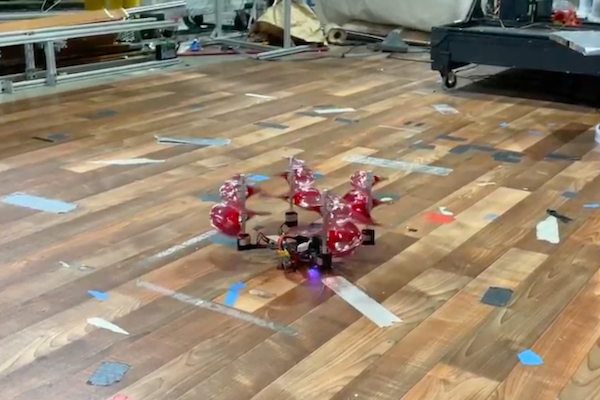
The aerial screw design is based on the concept of an Archimedes’ screw, which pushes against air to propel itself into the air and obtain flight, per Gizmodo.
Despite its historical nature, the design does have something in common with the drones of today: changing propeller speed to tilt the aircraft in any particular direction.
However, there are some improvements that can be made. The 15th-century design by da Vinci suggests that the user spins the corkscrew-shaped wings by hand, but thankfully, we do have some technological advances that can replace that: batteries and electric motors.
This, alongside the fact that lightweight materials like aluminum, plastic, and batteries are more accessible today than they were during the Renaissance era—which saw wood and leather being the main materials of the time—meant that the design was feasible.
There’s no telling that da Vinci would’ve built a successful prototype in his time with the materials he had on hand, which are not quite suitable for the demands of aircraft design. Perhaps he did try.
The results and the first video of ‘Crimson Spin’ flying were presented at this year’s Transformative Vertical Flight 2022 conference in California.
[via Gizmodo and CNET, video via RT, images by Austin Prete and featured with permission, and Wikimedia Commons]


